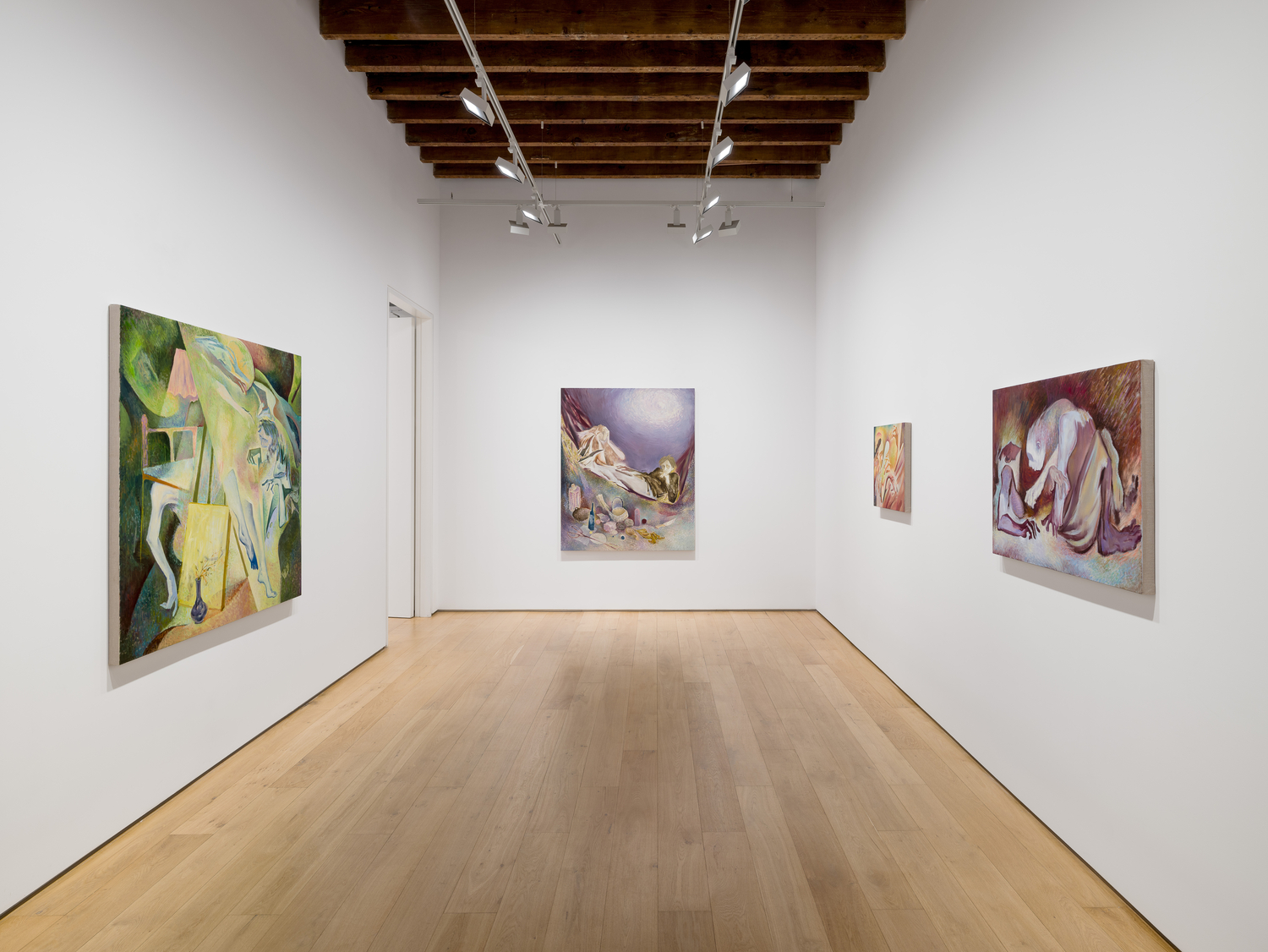
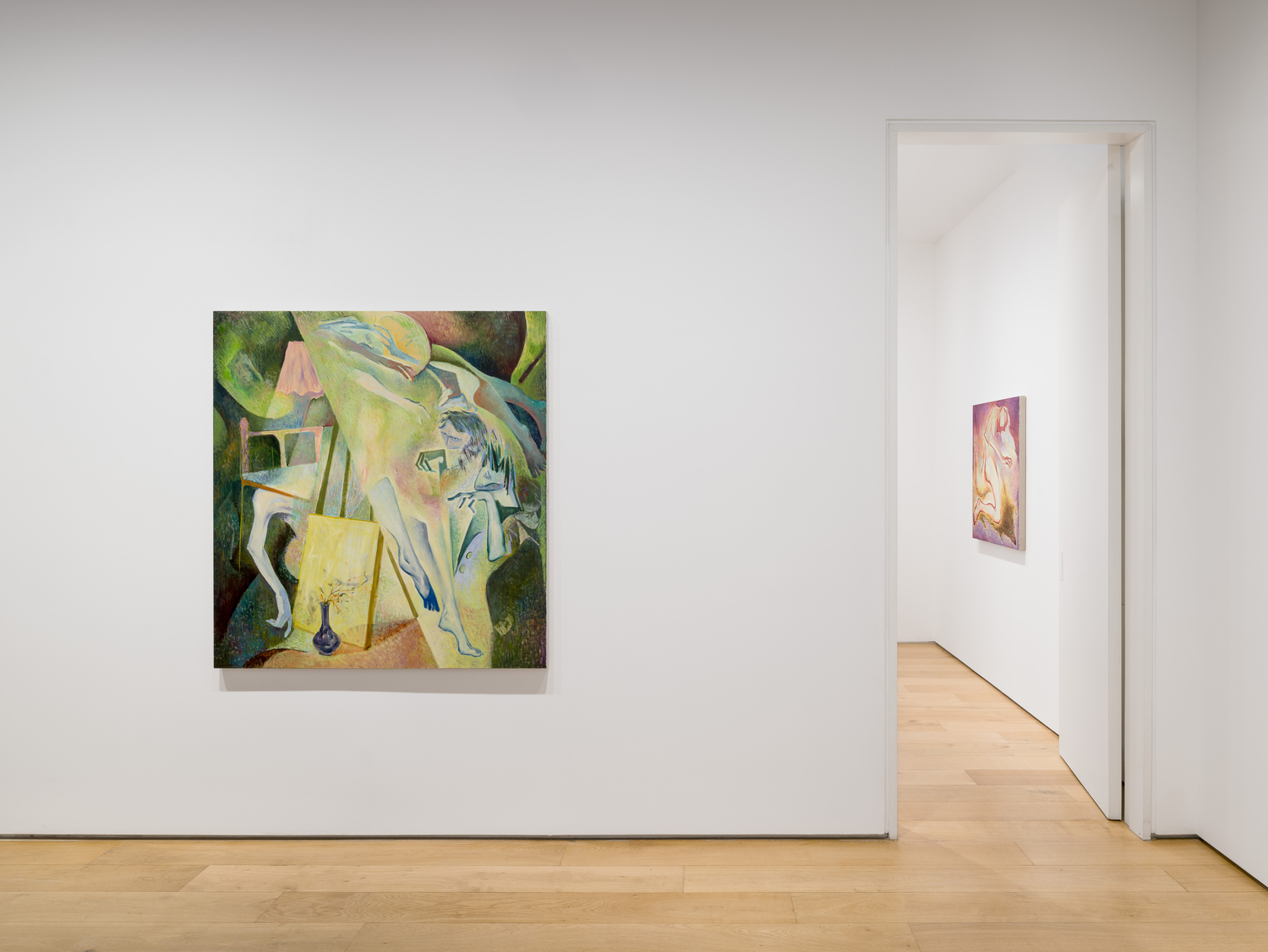
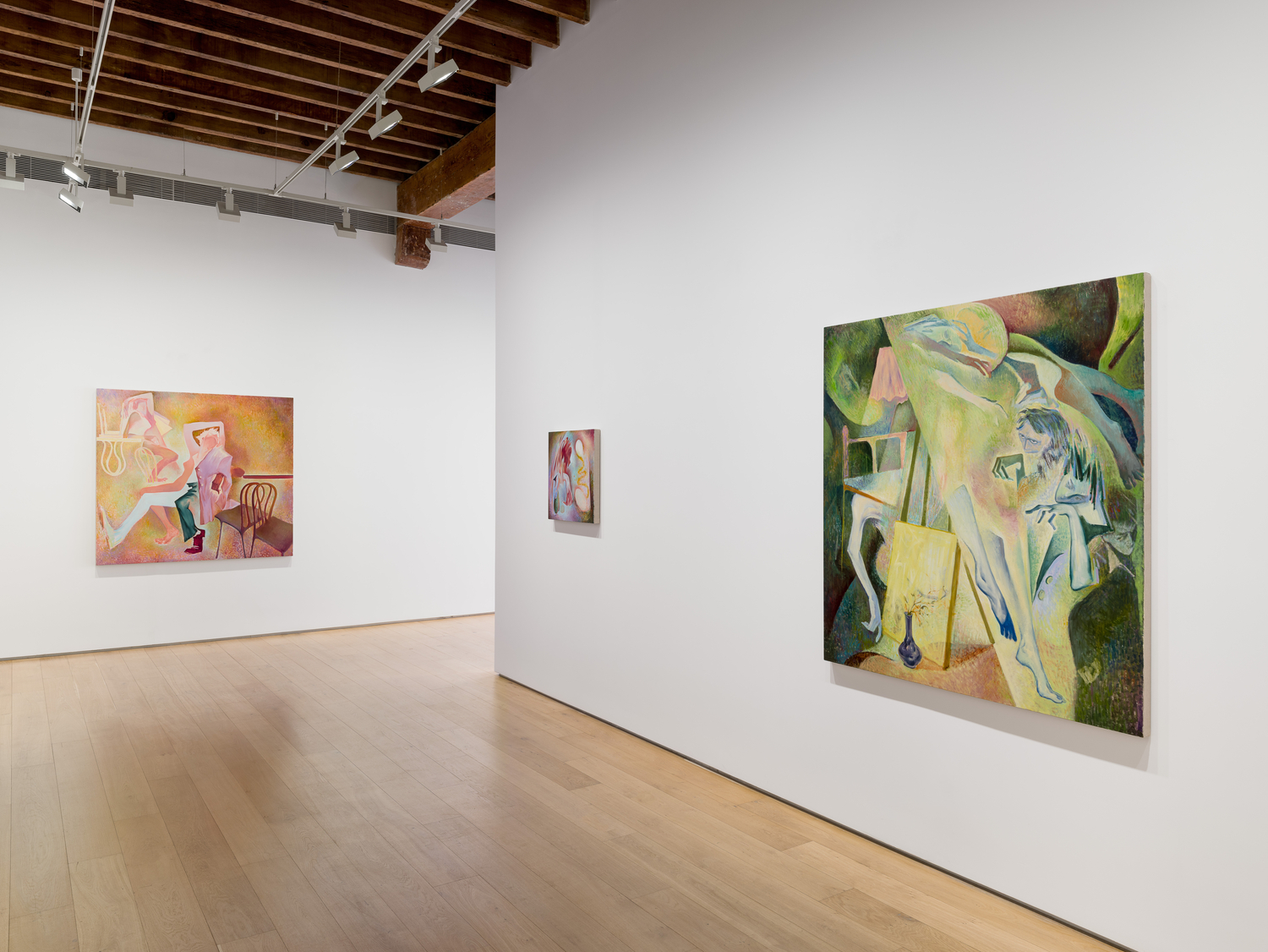
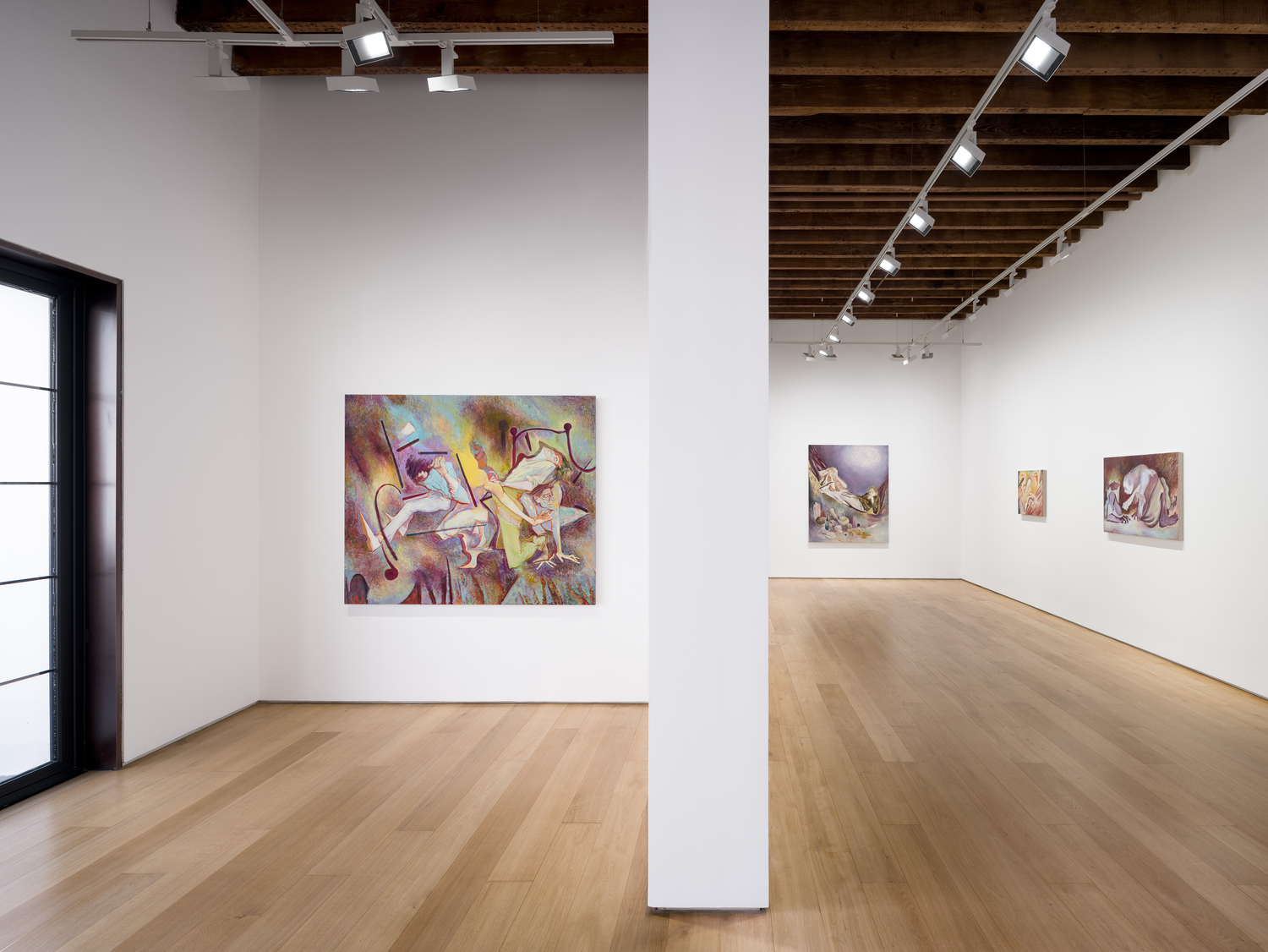
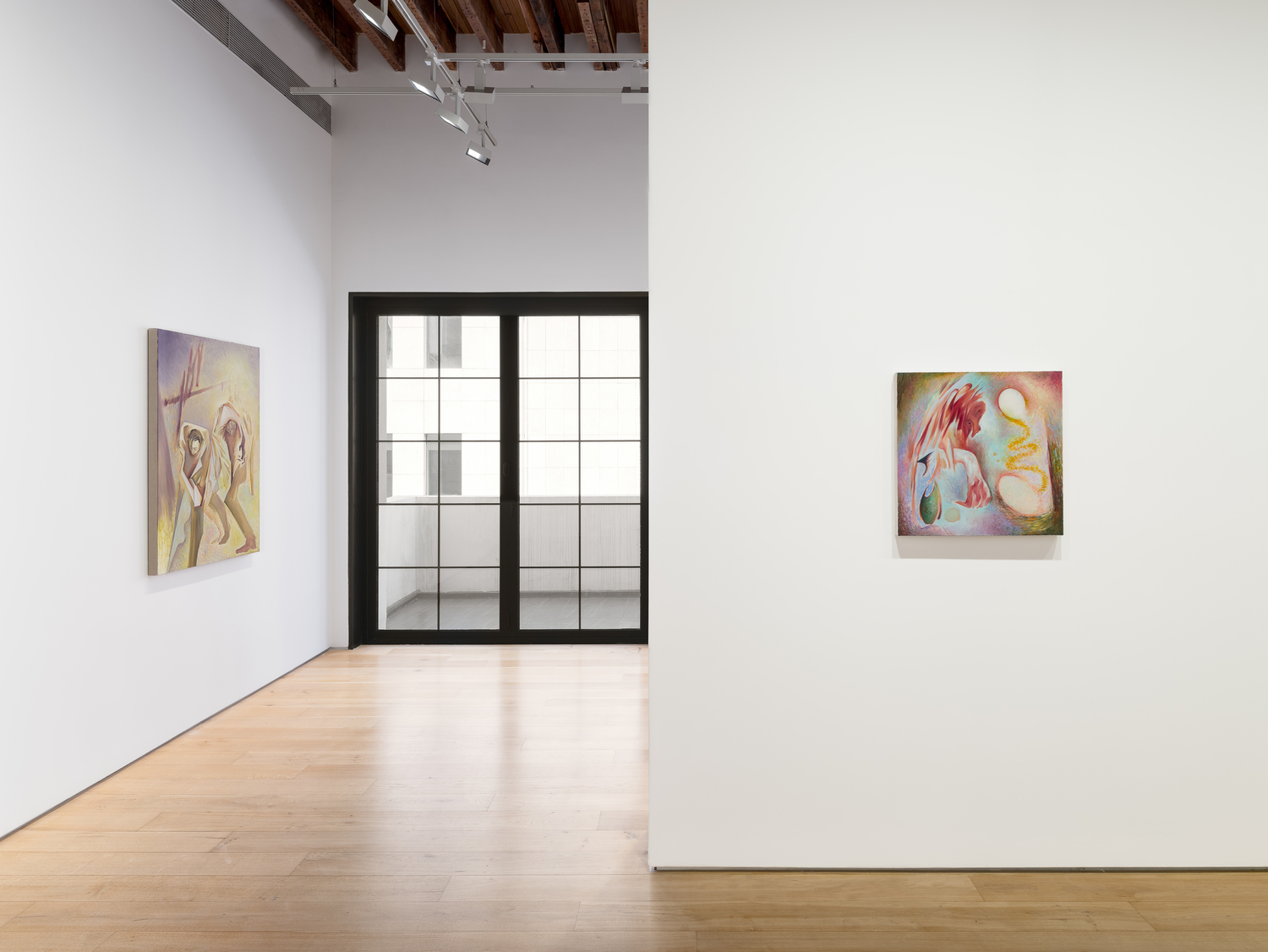
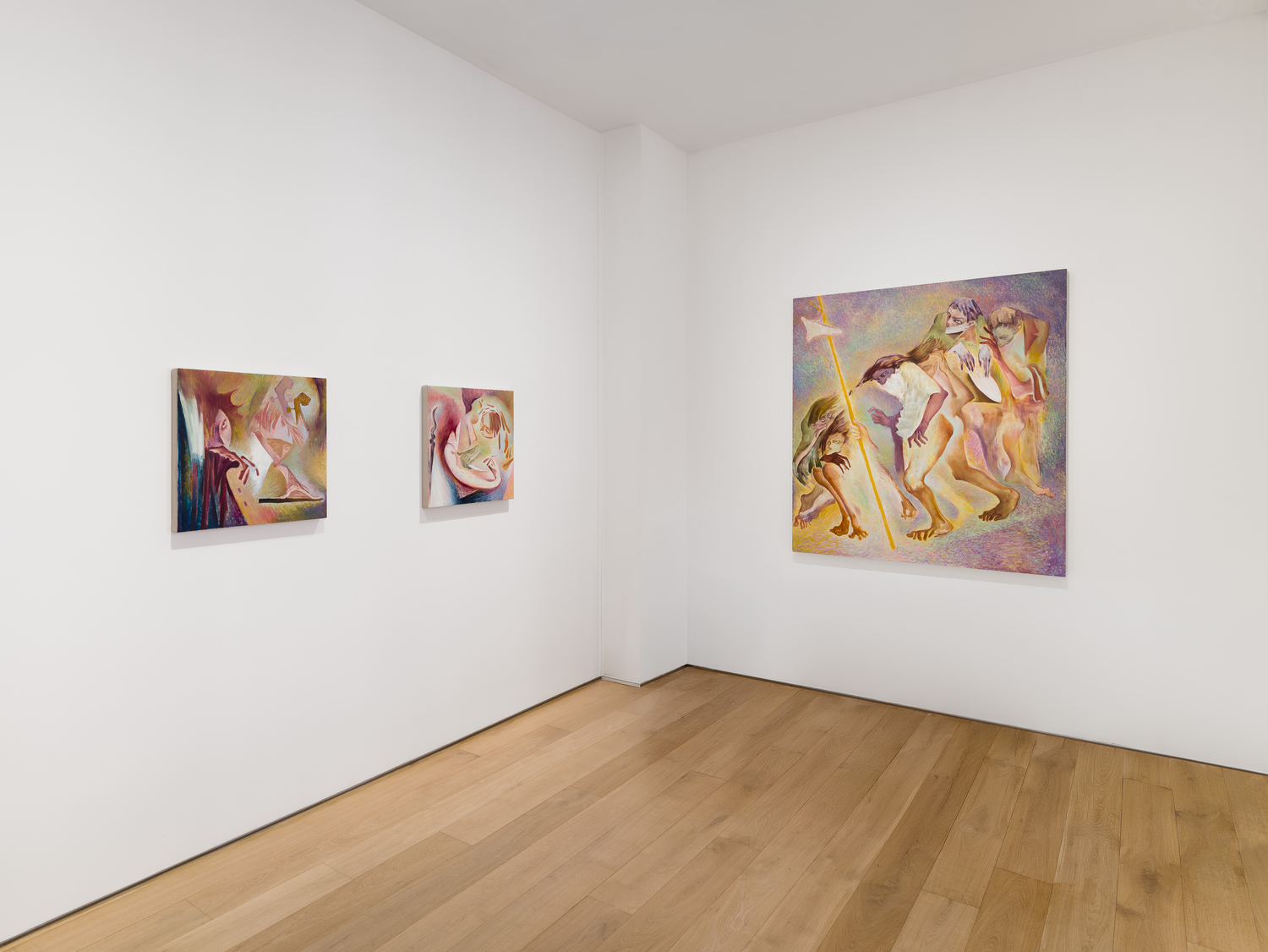
For his first solo exhibition with Lisson Gallery in Shanghai, Li Ran presents a series of new and recent works that highlight the evolving direction of his painting practice, marked by a deepened focus on material painterliness and pictorial storytelling. Influenced by pre-modernist traditions, including Western European Symbolism, Post-Impressionism, Soviet Revolutionary Romanticism, and modern Chinese satirical cartoons, Li draws inspiration not only from the visual heritage of these movements but also from the multidisciplinary activities of their practitioners, spanning literature, poetry, music, education, publishing, and painting. His own practice is similarly interdisciplinary, extending across installation, performance, writing, video, and painting, and often incorporating archival photographs, staged imagery, vocal imitation, and sound performance.
Read moreIn this exhibition, Li avoids both the conceptualist reduction of painting to mere image-bearing substrate as well as the framing of ‘painterliness’ as a privileged domain of aesthetics. Instead, he distills interwoven dimensions from a holistic view of his broader artistic output, thereby opening a more expansive field of possibility within his approach to painting—one that neither leans toward an ineffable future fantasy nor settles for facile recombination of his own prior imagery. Collectively, the works engage in a sustained dialogue around the notion of the ‘stranger.’ This figure, whom the artist seeks through his practice, may be discovered externally or ultimately recognized as the artist himself; it may also be that the stranger was present all along. Whether in states of waiting, walking, or performing, the ‘stranger’ persists. The failure to recognize this presence stems not from unfamiliarity, but from an underlying incapacity to trust. For Li, the lens of estrangement thus operates as a mechanism for sustaining self-awareness and critical self-reflection amid his day-to-day routines.
Becoming Wild (2025) draws upon a legend from Li’s childhood. In the 1990s, a man from another town reportedly encountered a ‘wild man’ in the Shennongjia forests of Hubei Province. After the encounter, he chose to remain in the wilderness, living a primitive existence—never cutting his hair, enduring the seasons—while continuing to search for the ‘wild man’. In time, he himself came to be mistaken for the subject he sought. But Your Senses Have Also Fallen (2025) depicts three elongated, distorted figures pulling at one another, some tilting forward or backward, others slipping from a bed, as if verging on collapse. The compositional drama conveys not only turbulence but also a question born of the artist’s self-reflection: Could the very painterliness constructed through sensory experience also become a form of familiar illusion? Oscillating between estrangement and sensuous pleasure, the work extends Li Ran’s ongoing inquiry into his identity as a painter and the self-belief that identity entails.
In Fellow Traveler (2026), Li responds to the exhibition’s title Like a Stranger from a distinct vantage point. Two figures draped in cloaks stride heavily through a hazy space, appearing almost as shadows of one another. One tilts their face downward, their expression evasive, while the other is nearly engulfed in shadow, their features obscured. It is within this fleeting moment of ‘seeing and vanishing’ that Li seeks to capture the uncanny. In the interplay between recognition and loss, the ‘stranger’ emerges not as an unrecognizable other, but as a fellow traveler, who has long accompanied the journey, yet has never been fully acknowledged.
Resisting confinement to a fixed visual language or a dogmatic ontology of painting, Li engages the medium with enduring regard for its inherent demands. Within the pictorial field, he constructs a space of dialogue that feels both intimate and remote. Through tensions between repetition and variation, he suggests that painting itself constitutes a continual encounter with the “stranger”—an encounter that becomes internalised as a driving force for his evolving practice. In these works, Li moves beyond the mere depiction of solitude; he actively adopts defamiliarization as a stance, one that allows him to maintain self-reflexivity while approaching glimpses of truth with conviction. This ever-present “stranger” may, in the end, be the very source from which Li Ran learns repeatedly how to reflect and restart.
李然在里森上海的首次个展带来的一系列新近画作,继续丰富其绘画语言与叙事概念。他从一系列前现代绘画风格中提炼养分,例如西欧的象征主义、后印象派、苏联革命浪漫主义,及中国近代的讽刺漫画等等;并聚焦于这些创作者的多重实践,及其对于文学、诗歌、音乐、教育、出版与绘画等多个领域的探索。李然的实践同样延续了这种跨域的精神,涉猎绘画、影像、表演、装置、写作等不同媒介,他常常通过照片文献收藏、场景摆拍、配音模仿、声音表演等等方式进行影像写作与绘画实践。
本次展览呈现李然绘画实践的最新发展脉络,其方向既非遵循观念主义的惯常思路,将绘画推向工具化的图像附庸,也非将绘画性单独强化为某种置于高位的纯粹美学路径,而是从其长期以来对创作实践的整体理解中,析出更多交织互动的多元面向;同时也展现出其绘画思考中更为丰富的可能性——既不指向某种不可告知的未来臆想,也不仅仅停留在对过往图像的简单拼合。展出的作品与展览题目“像个陌生人”形成深层对话:艺术家在创作中寻找的那个“陌生人”,或者成为了那个“陌生人”;抑或那个陌生人并不陌生,一直都是同路人。不论是在等、在走或是在演,“陌生人”始终在那里;不是因为不认识,而是因为不能相信。这种“陌生化”的视角提醒着李然作为创作者,在日复一日的工作中应持有的个体意识与自我审视。
展出的《成为野人》(2025) 源自李然儿时在家乡所听见的异闻:90年代的时候,有个外地人在湖北神农架林区遭遇过“野人”,之后他就一直在这个原始林区蹲守生活。他不剪发,不刮胡子,风餐露宿,不停地找“野人”,直到有一天,他自己也被人当做“野人”。而在《但你感觉也堕落了》(2025) 的画面中,三位被拉长、扭曲的人物彼此牵动又几近崩解,有的前倾后仰,有的正从床架滑落。充满动荡感的构图不仅制造了视觉的断裂,也指向李然在自省中展开的诘问:那由感官所建构的绘画性本身,是否同样可能成为一种熟悉的假象?作品在“陌生”与“堕落的感受”之间,延续了李然对“绘画身份”与“自我信任”的持续追问。
在《同路人》(2026) 中,李然从另一视角回应着“像个陌生人”的主题。画面中,两位身披斗篷般衣物的人物在昏黄而迷蒙的空间里前行,姿态沉重,仿如互为彼此的阴影。其中一人侧脸微垂,神情似在逃避;另一人则几乎被阴影吞没,面容模糊。而在那“看见又消失”的瞬间,正是李然试图捕捉的异象。在“失落”与“认出”的交互中,那个“陌生人”并非无法被认出,而是始终与我们伴随却未曾被确认的同路人。
李然既不固守于某一种狭隘的语言或风格,也不盲从对绘画本体的崇拜,而是始终以尊重的态度,回应媒介自身的内在要求。艺术家在画布上构建了一个既疏离又私密的对话场域,在重复与变化的张力之间,暗示创作本身即是一场与“陌生人”的永恒相遇,最终内化为艺术家自身不断精进实践的动力。这些画作并非简单地描绘孤独,而是将“陌生化”作为一种主动的创作立场——在疏离中保持警觉,在相信中望见真实。那个始终在场的“陌生人”,或许正是李然得以不断重新观看、重新出发的初心。