
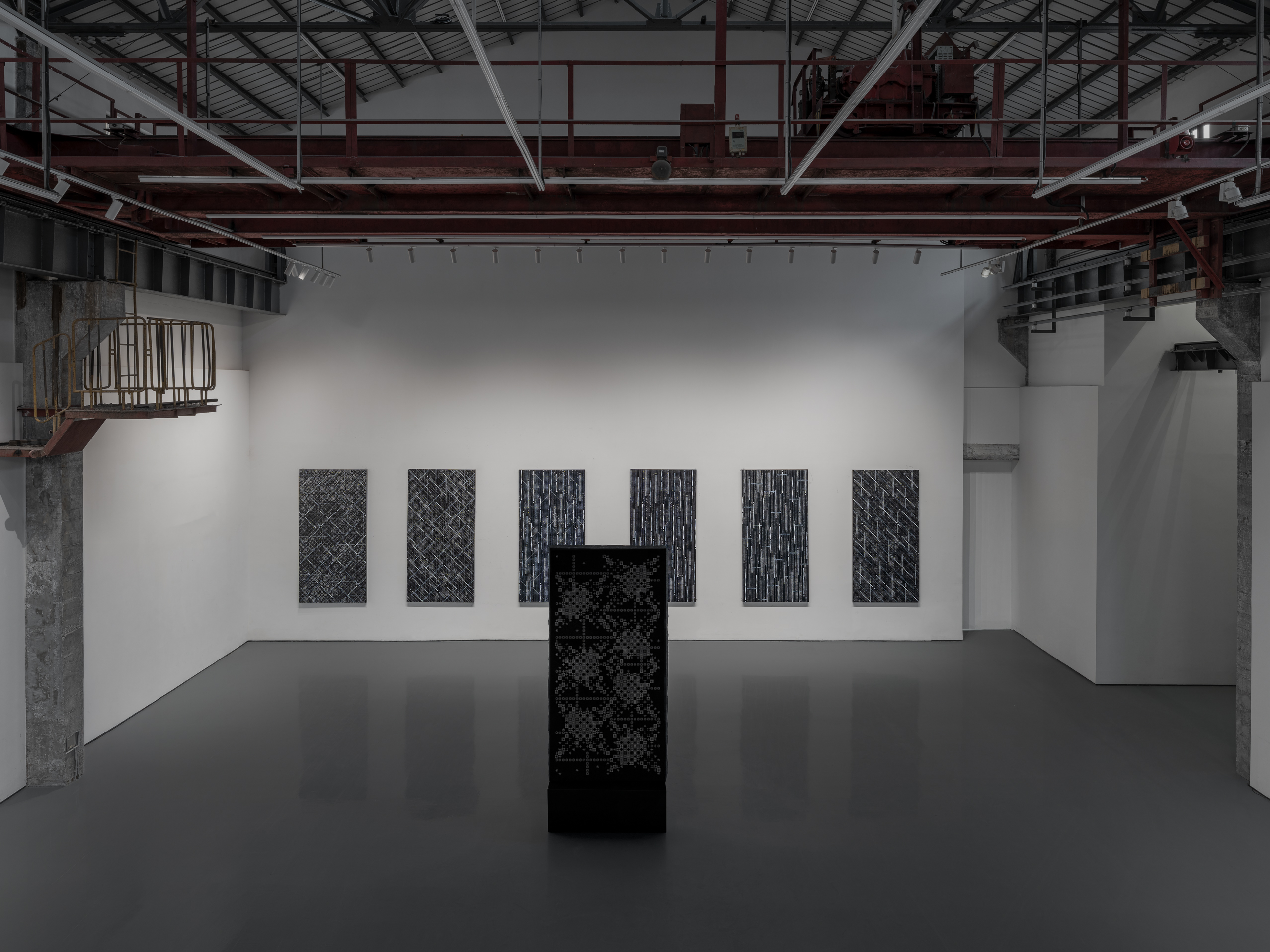
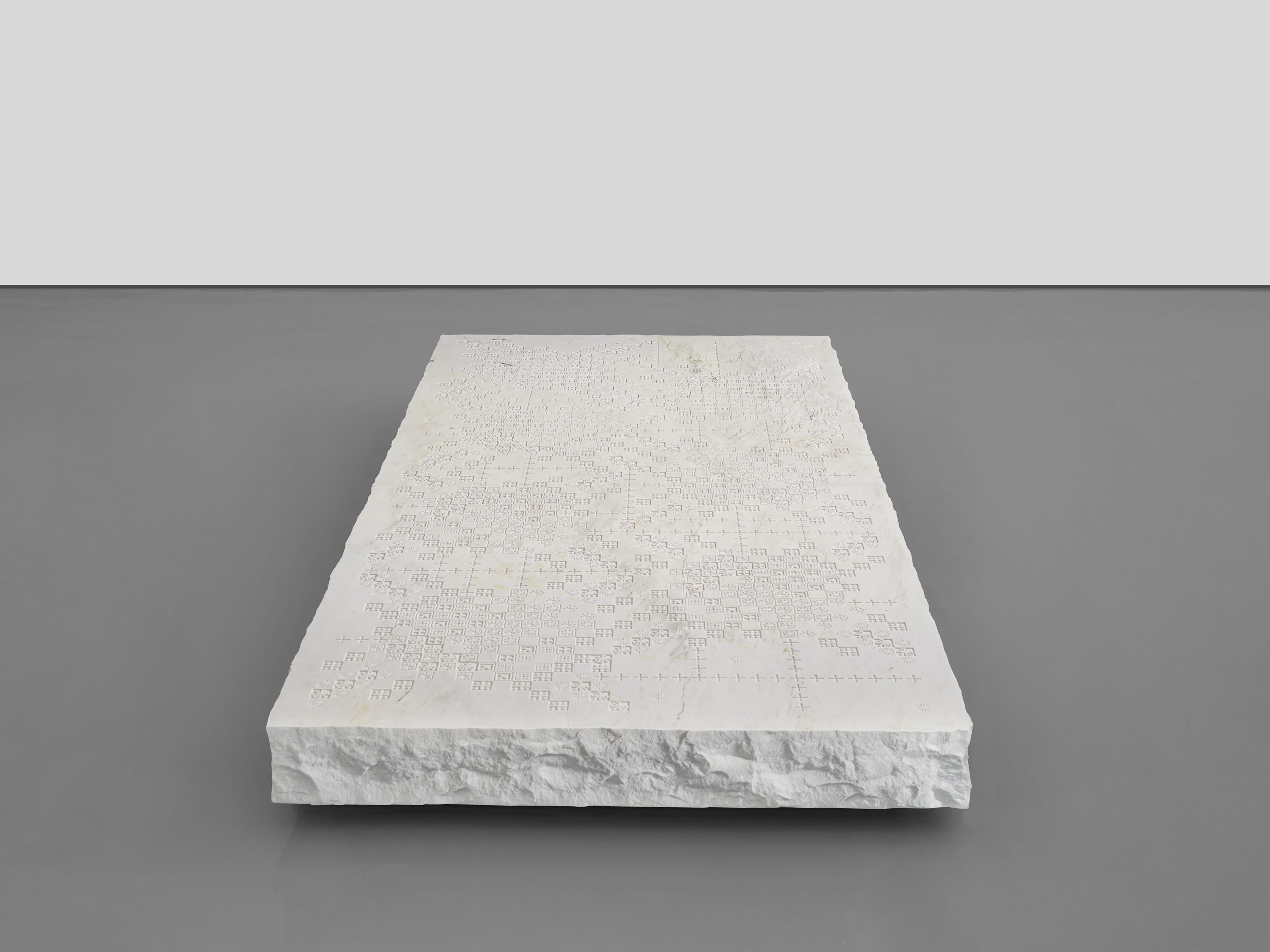
Installation view of Appearance of Crosses new works at Ding Yi’s Studio, including sculpture Appearance of Crosses Stele 2025-1 (2025) in the foreground © Ding Yi, Courtesy Lisson Gallery and ShanghART Gallery
Ding Yi
Cosmotechnics: Ding Yi as a Planetary Code
Fondazione Querini Stampalia, Venice
9 May – 22 November 2026
To coincide with the opening of the 61st International Art Exhibition of La Biennale di Venezia, one of China’s most prominent abstractionists, the Shanghai-based artist Ding Yi, presents a major presentation at Fondazione Querini Stampalia. Curated by Alfredo Cramerotti and Auronda Scalera, the exhibition brings together new and historic works that trace the evolution of Ding Yi’s language, alongside a series of stone steles that anchor the exhibition as a place of reflection and ritual, recalling ancient sites across China and Europe. Titled Cosmotechnics – a concept borrowed from philosopher Yuk Hui – the presentation transforms the Area Scarpa into a contemplative forest of images, the works operating like a planetary code with their placement creating a meandering path reminiscent of traditional Chinese gardens. This is Ding Yi’s first time presenting a solo exhibition during La Biennale di Venezia since his participation in the inaugural exhibition of Chinese art at La Biennale in 1993, curated by Achille Bonito Oliva for the 45th International Art Exhibition.
As an intentional departure from the ideological excess of post-Cultural Revolution painting, in 1988 Ding Yi began his Appearance of Crosses series. At a time when Chinese contemporary art was dominated by neo-expressionism and political pop, Ding Yi turned to the grid – not as a neutral device of Western modernism, but as a framework for meaning that was open, relational and generative. Over the decades, his system evolved, expanding into chromatic explorations, fluorescent canvases capturing Shanghai’s urban glow, and eventually sculptural reliefs that introduced shadow and tactility, culminating in projects where viewers could literally walk through the grid.
For Cosmotechnics, Ding Yi brings this inquiry to its most distilled form: twelve black-and-white paintings arranged as a constellation. These panels function as both paintings and contemporary steles, forming a meditative environment that invites the visitor to move slowly and encounter each work from multiple perspectives. The focus on a black-and-white palette marks an important pivot in Ding Yi’s practice: after more than a decade devoted to fluorescent colour, he embraced monochrome as a departure from the saturation of social noise and toward broader questions of time, space and perception. Alongside this, Cosmotechnics also features seven historic works spanning the 1980s to the 2020s, which – seen together – trace Ding Yi’s journey from the disciplined austerity of the late 1980s to a fully expanded cosmotechnical practice, where painting, sculpture, and architecture interpenetrate.
Accompanying these panels are two stone steles, either incised or rendered in relief, carved with Ding Yi’s signature ‘Appearance of Crosses’ motif. These commemorative forms, at once minimal and monumental, situate the paintings within a deeper temporal register, recalling China’s renowned Stele Forest (Beilin) and ancient sites such as Stonehenge, inviting reflection on memory, continuity, and cosmic orientation. These panels also prompt viewers to experience time as simultaneity, as an encounter with history and futurity at once: from classical Chinese ink traditions and memories of industrial Shanghai, to anticipations of the role of technology in our future.
Alfredo Cramerotti and Auronda Scalera, curators, say: “Ding Yi’s Cosmotechnics finds an exact counterpart in Carlo Scarpa’s Area at the Fondazione Querini Stampalia: a modernist instrument of equilibrium designed to live with Venice’s instability rather than deny it. Scarpa measures water, threshold, and passage with the same rigor that Ding Yi applies to the pictorial field. The new monochrome series here is a structural decision, like a register that clears perceptual noise and makes interval and proportion legible. In dialogue with Scarpa, Ding Yi traces a logic of construction in which painting, sculpture, and architecture converge and form a grammar of thresholds, attuned to a city where balance is always negotiated.”
Cristiana Collu, Director of the Fondazione Querini Stampalia, says: “When Carlo Scarpa said he wanted to ‘cut out the blue of the sky,’ he meant that he wanted to render the visual field immediately perceptible, transforming a cosmic element into a bodily encounter through an architectural process; he was speaking poetically, for sure, but also very practically. Ding Yi’s works follow the same principle. Whether stars or cosmic elements are discernible in darkness or concealed in broad daylight, their presence remains constant: only outstanding technique, art and intuition make them always visible. In my reading, they share an architectural syntax, a sort of configuration of points that sustains a latent order, one not readily decipherable, yet perceivable somewhere between wonder and mystery.”
Ding Yi says: “I am honoured to present a series of new works to audiences in Italy and across Europe at the Fondazione Querini Stampalia during the Venice Biennale. The new black-and-white paintings and stone steles reveal the macrocosmic void within the universe of Appearance of Crosses. Twelve basswood paintings of identical dimensions are arranged as a constellation, transforming the exhibition space into a solemn void that invites viewers to contemplate as they wander through the presentation. In juxtaposition, two stone steles bearing relief incisions establish a material and formal dialogue with the engraved marks and brushstrokes of the wooden panels, foregrounding the interplay between painting and sculpture. Solid, still, and silent, these images of steles are not relics; rather, grounded in a practice firmly situated in the present, they respond to the visual structures and temporal measures of the history of civilisation.”
Published by Skira, the volume accompanying Ding Yi: Cosmotechnics is conceived as a critical object in its own right: a book that mirrors the exhibition’s logic of constellation and measured encounter. Bringing together newly commissioned texts, a sustained curatorial dialogue, and a substantial visual corpus – including full installation views within Carlo Scarpa’s Area at the Fondazione Querini Stampalia and a documented selection of works from the 1980s to the 2020s – the publication clarifies how Ding Yi’s monochrome turn reframes his practice through structure, interval, and spatial reciprocity. With rigorous captions, artist chronology, and production notes, it offers both a readable entry point and an enduring scholarly reference, articulating the alignment between Ding Yi’s mark-making and Scarpa’s precision – two practices that transform constraint into equilibrium.
Cosmotechnics: Ding Yi as a Planetary Code is presented by the Fondazione Querini Stampalia with the support of Lisson Gallery and ShanghART Gallery.
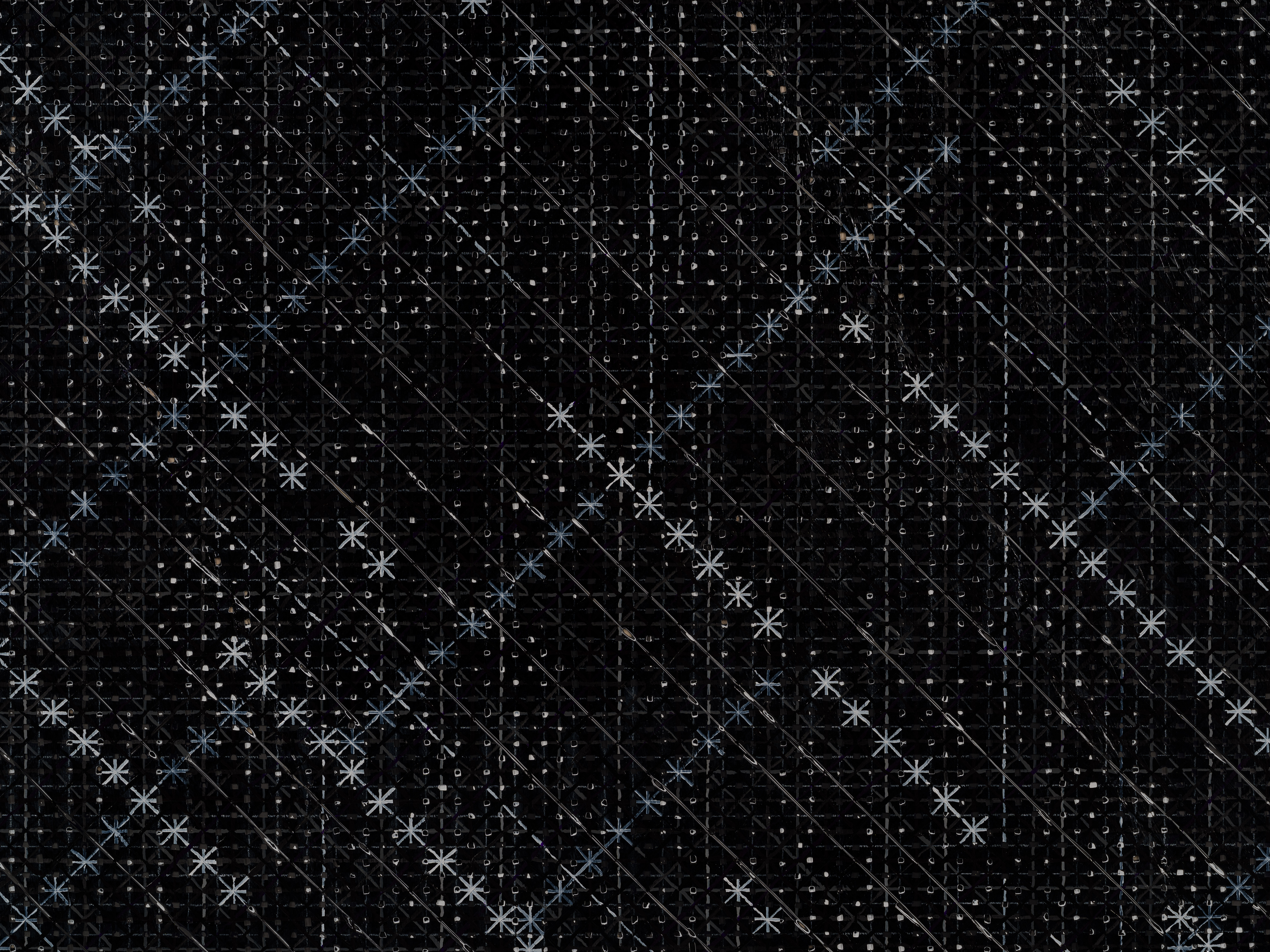
Ding Yi, Appearance of Crosses 2025-30, 2025, Acrylic and woodcuts on basswood, 240 x 120 cm, 94 1/2 x 47 1/4 in © Ding Yi, Courtesy Lisson Gallery
Ding Yi
Cosmotechnics: Ding Yi as a Planetary Code
Fondazione Querini Stampalia, Venice
9 May – 22 November 2026
To coincide with the opening of the 61st International Art Exhibition of La Biennale di Venezia, one of China’s most prominent abstractionists, the Shanghai-based artist Ding Yi, presents a major presentation at Fondazione Querini Stampalia. Curated by Alfredo Cramerotti and Auronda Scalera, the exhibition brings together new and historic works that trace the evolution of Ding Yi’s language, alongside a series of stone steles that anchor the exhibition as a place of reflection and ritual, recalling ancient sites across China and Europe. Titled Cosmotechnics – a concept borrowed from philosopher Yuk Hui – the presentation transforms the Area Scarpa into a contemplative forest of images, the works operating like a planetary code with their placement creating a meandering path reminiscent of traditional Chinese gardens. This is Ding Yi’s first time presenting a solo exhibition during La Biennale di Venezia since his participation in the inaugural exhibition of Chinese art at La Biennale in 1993, curated by Achille Bonito Oliva for the 45th International Art Exhibition.
As an intentional departure from the ideological excess of post-Cultural Revolution painting, in 1988 Ding Yi began his Appearance of Crosses series. At a time when Chinese contemporary art was dominated by neo-expressionism and political pop, Ding Yi turned to the grid – not as a neutral device of Western modernism, but as a framework for meaning that was open, relational and generative. Over the decades, his system evolved, expanding into chromatic explorations, fluorescent canvases capturing Shanghai’s urban glow, and eventually sculptural reliefs that introduced shadow and tactility, culminating in projects where viewers could literally walk through the grid.
For Cosmotechnics, Ding Yi brings this inquiry to its most distilled form: twelve black-and-white paintings arranged as a constellation. These panels function as both paintings and contemporary steles, forming a meditative environment that invites the visitor to move slowly and encounter each work from multiple perspectives. The focus on a black-and-white palette marks an important pivot in Ding Yi’s practice: after more than a decade devoted to fluorescent colour, he embraced monochrome as a departure from the saturation of social noise and toward broader questions of time, space and perception. Alongside this, Cosmotechnics also features seven historic works spanning the 1980s to the 2020s, which – seen together – trace Ding Yi’s journey from the disciplined austerity of the late 1980s to a fully expanded cosmotechnical practice, where painting, sculpture, and architecture interpenetrate.
Accompanying these panels are two stone steles, either incised or rendered in relief, carved with Ding Yi’s signature ‘Appearance of Crosses’ motif. These commemorative forms, at once minimal and monumental, situate the paintings within a deeper temporal register, recalling China’s renowned Stele Forest (Beilin) and ancient sites such as Stonehenge, inviting reflection on memory, continuity, and cosmic orientation. These panels also prompt viewers to experience time as simultaneity, as an encounter with history and futurity at once: from classical Chinese ink traditions and memories of industrial Shanghai, to anticipations of the role of technology in our future.
Alfredo Cramerotti and Auronda Scalera, curators, say: “Ding Yi’s Cosmotechnics finds an exact counterpart in Carlo Scarpa’s Area at the Fondazione Querini Stampalia: a modernist instrument of equilibrium designed to live with Venice’s instability rather than deny it. Scarpa measures water, threshold, and passage with the same rigor that Ding Yi applies to the pictorial field. The new monochrome series here is a structural decision, like a register that clears perceptual noise and makes interval and proportion legible. In dialogue with Scarpa, Ding Yi traces a logic of construction in which painting, sculpture, and architecture converge and form a grammar of thresholds, attuned to a city where balance is always negotiated.”
Cristiana Collu, Director of the Fondazione Querini Stampalia, says: “When Carlo Scarpa said he wanted to ‘cut out the blue of the sky,’ he meant that he wanted to render the visual field immediately perceptible, transforming a cosmic element into a bodily encounter through an architectural process; he was speaking poetically, for sure, but also very practically. Ding Yi’s works follow the same principle. Whether stars or cosmic elements are discernible in darkness or concealed in broad daylight, their presence remains constant: only outstanding technique, art and intuition make them always visible. In my reading, they share an architectural syntax, a sort of configuration of points that sustains a latent order, one not readily decipherable, yet perceivable somewhere between wonder and mystery.”
Ding Yi says: “I am honoured to present a series of new works to audiences in Italy and across Europe at the Fondazione Querini Stampalia during the Venice Biennale. The new black-and-white paintings and stone steles reveal the macrocosmic void within the universe of Appearance of Crosses. Twelve basswood paintings of identical dimensions are arranged as a constellation, transforming the exhibition space into a solemn void that invites viewers to contemplate as they wander through the presentation. In juxtaposition, two stone steles bearing relief incisions establish a material and formal dialogue with the engraved marks and brushstrokes of the wooden panels, foregrounding the interplay between painting and sculpture. Solid, still, and silent, these images of steles are not relics; rather, grounded in a practice firmly situated in the present, they respond to the visual structures and temporal measures of the history of civilisation.”
Published by Skira, the volume accompanying Ding Yi: Cosmotechnics is conceived as a critical object in its own right: a book that mirrors the exhibition’s logic of constellation and measured encounter. Bringing together newly commissioned texts, a sustained curatorial dialogue, and a substantial visual corpus – including full installation views within Carlo Scarpa’s Area at the Fondazione Querini Stampalia and a documented selection of works from the 1980s to the 2020s – the publication clarifies how Ding Yi’s monochrome turn reframes his practice through structure, interval, and spatial reciprocity. With rigorous captions, artist chronology, and production notes, it offers both a readable entry point and an enduring scholarly reference, articulating the alignment between Ding Yi’s mark-making and Scarpa’s precision – two practices that transform constraint into equilibrium.
Cosmotechnics: Ding Yi as a Planetary Code is presented by the Fondazione Querini Stampalia with the support of Lisson Gallery and ShanghART Gallery.
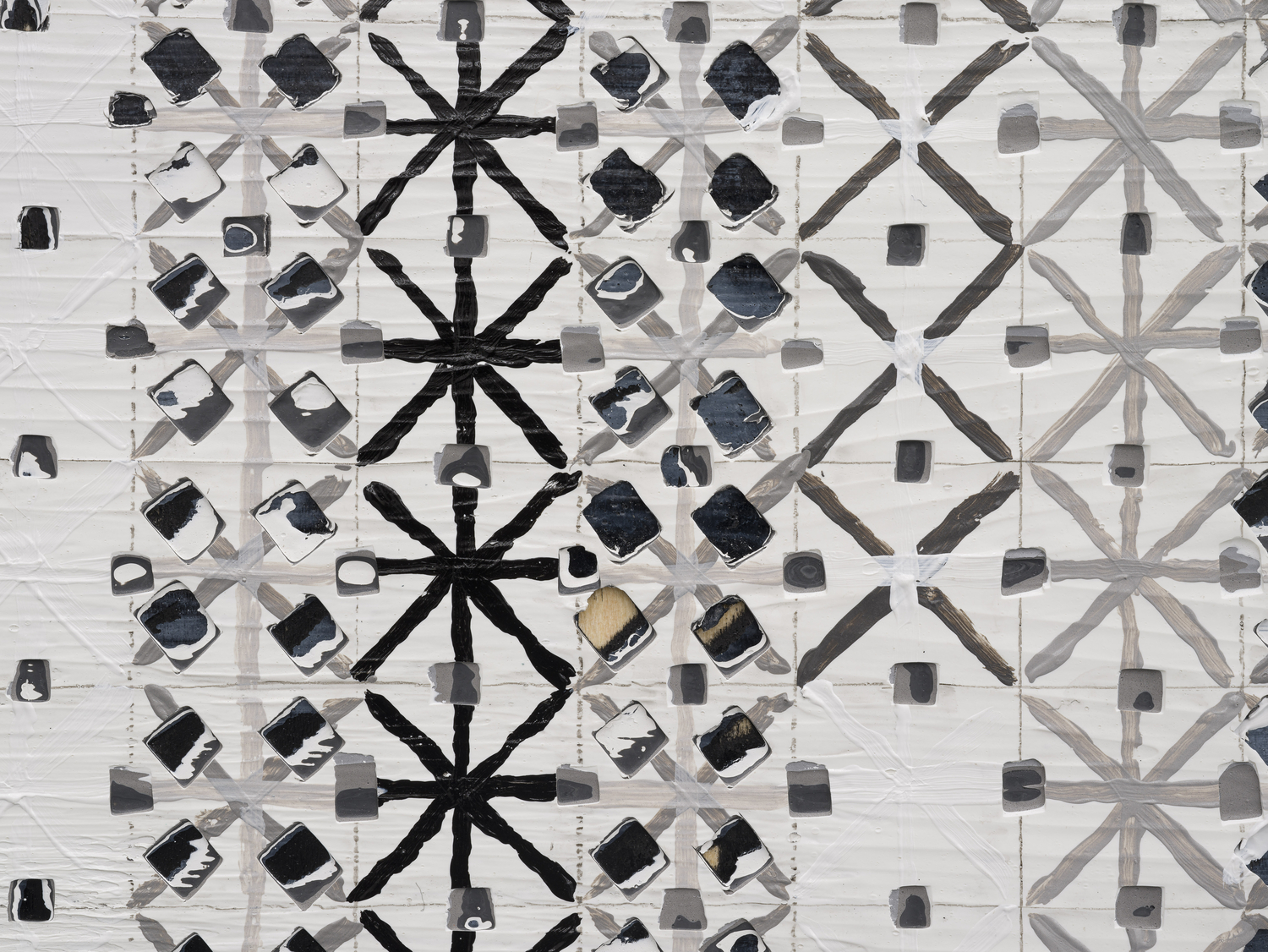
Ding Yi, Appearance of Crosses 2025-33 (detail), 2025, Acrylic and woodcuts on basswood, 240 x 120 cm, 94 1/2 x 47 1/4 in © Ding Yi. Courtesy Lisson Gallery and ShanghART Gallery
Ding Yi
Cosmotechnics: Ding Yi as a Planetary Code
Fondazione Querini Stampalia, Venice
9 May – 22 November 2026
To coincide with the opening of the 61st International Art Exhibition of La Biennale di Venezia, one of China’s most prominent abstractionists, the Shanghai-based artist Ding Yi, presents a major presentation at Fondazione Querini Stampalia. Curated by Alfredo Cramerotti and Auronda Scalera, the exhibition brings together new and historic works that trace the evolution of Ding Yi’s language, alongside a series of stone steles that anchor the exhibition as a place of reflection and ritual, recalling ancient sites across China and Europe. Titled Cosmotechnics – a concept borrowed from philosopher Yuk Hui – the presentation transforms the Area Scarpa into a contemplative forest of images, the works operating like a planetary code with their placement creating a meandering path reminiscent of traditional Chinese gardens. This is Ding Yi’s first time presenting a solo exhibition during La Biennale di Venezia since his participation in the inaugural exhibition of Chinese art at La Biennale in 1993, curated by Achille Bonito Oliva for the 45th International Art Exhibition.
As an intentional departure from the ideological excess of post-Cultural Revolution painting, in 1988 Ding Yi began his Appearance of Crosses series. At a time when Chinese contemporary art was dominated by neo-expressionism and political pop, Ding Yi turned to the grid – not as a neutral device of Western modernism, but as a framework for meaning that was open, relational and generative. Over the decades, his system evolved, expanding into chromatic explorations, fluorescent canvases capturing Shanghai’s urban glow, and eventually sculptural reliefs that introduced shadow and tactility, culminating in projects where viewers could literally walk through the grid.
For Cosmotechnics, Ding Yi brings this inquiry to its most distilled form: twelve black-and-white paintings arranged as a constellation. These panels function as both paintings and contemporary steles, forming a meditative environment that invites the visitor to move slowly and encounter each work from multiple perspectives. The focus on a black-and-white palette marks an important pivot in Ding Yi’s practice: after more than a decade devoted to fluorescent colour, he embraced monochrome as a departure from the saturation of social noise and toward broader questions of time, space and perception. Alongside this, Cosmotechnics also features seven historic works spanning the 1980s to the 2020s, which – seen together – trace Ding Yi’s journey from the disciplined austerity of the late 1980s to a fully expanded cosmotechnical practice, where painting, sculpture, and architecture interpenetrate.
Accompanying these panels are two stone steles, either incised or rendered in relief, carved with Ding Yi’s signature ‘Appearance of Crosses’ motif. These commemorative forms, at once minimal and monumental, situate the paintings within a deeper temporal register, recalling China’s renowned Stele Forest (Beilin) and ancient sites such as Stonehenge, inviting reflection on memory, continuity, and cosmic orientation. These panels also prompt viewers to experience time as simultaneity, as an encounter with history and futurity at once: from classical Chinese ink traditions and memories of industrial Shanghai, to anticipations of the role of technology in our future.
Alfredo Cramerotti and Auronda Scalera, curators, say: “Ding Yi’s Cosmotechnics finds an exact counterpart in Carlo Scarpa’s Area at the Fondazione Querini Stampalia: a modernist instrument of equilibrium designed to live with Venice’s instability rather than deny it. Scarpa measures water, threshold, and passage with the same rigor that Ding Yi applies to the pictorial field. The new monochrome series here is a structural decision, like a register that clears perceptual noise and makes interval and proportion legible. In dialogue with Scarpa, Ding Yi traces a logic of construction in which painting, sculpture, and architecture converge and form a grammar of thresholds, attuned to a city where balance is always negotiated.”
Cristiana Collu, Director of the Fondazione Querini Stampalia, says: “When Carlo Scarpa said he wanted to ‘cut out the blue of the sky,’ he meant that he wanted to render the visual field immediately perceptible, transforming a cosmic element into a bodily encounter through an architectural process; he was speaking poetically, for sure, but also very practically. Ding Yi’s works follow the same principle. Whether stars or cosmic elements are discernible in darkness or concealed in broad daylight, their presence remains constant: only outstanding technique, art and intuition make them always visible. In my reading, they share an architectural syntax, a sort of configuration of points that sustains a latent order, one not readily decipherable, yet perceivable somewhere between wonder and mystery.”
Ding Yi says: “I am honoured to present a series of new works to audiences in Italy and across Europe at the Fondazione Querini Stampalia during the Venice Biennale. The new black-and-white paintings and stone steles reveal the macrocosmic void within the universe of Appearance of Crosses. Twelve basswood paintings of identical dimensions are arranged as a constellation, transforming the exhibition space into a solemn void that invites viewers to contemplate as they wander through the presentation. In juxtaposition, two stone steles bearing relief incisions establish a material and formal dialogue with the engraved marks and brushstrokes of the wooden panels, foregrounding the interplay between painting and sculpture. Solid, still, and silent, these images of steles are not relics; rather, grounded in a practice firmly situated in the present, they respond to the visual structures and temporal measures of the history of civilisation.”
Published by Skira, the volume accompanying Ding Yi: Cosmotechnics is conceived as a critical object in its own right: a book that mirrors the exhibition’s logic of constellation and measured encounter. Bringing together newly commissioned texts, a sustained curatorial dialogue, and a substantial visual corpus – including full installation views within Carlo Scarpa’s Area at the Fondazione Querini Stampalia and a documented selection of works from the 1980s to the 2020s – the publication clarifies how Ding Yi’s monochrome turn reframes his practice through structure, interval, and spatial reciprocity. With rigorous captions, artist chronology, and production notes, it offers both a readable entry point and an enduring scholarly reference, articulating the alignment between Ding Yi’s mark-making and Scarpa’s precision – two practices that transform constraint into equilibrium.
Cosmotechnics: Ding Yi as a Planetary Code is presented by the Fondazione Querini Stampalia with the support of Lisson Gallery and ShanghART Gallery.
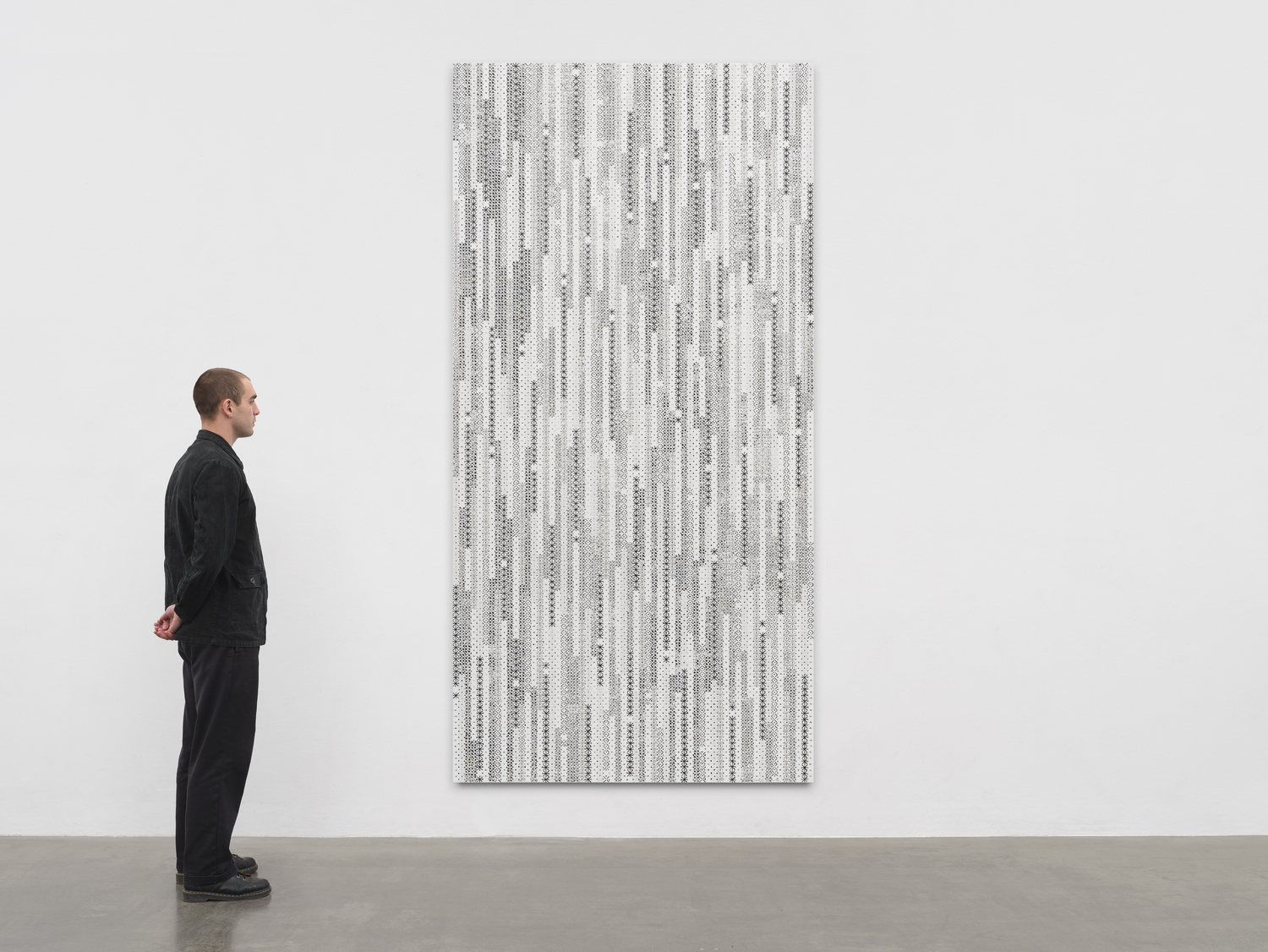
Ding Yi, Appearance of Crosses 2025-33, 2025, Acrylic and woodcuts on basswood, 240 x 120 cm, 94 1/2 x 47 1/4 in © Ding Yi. Courtesy Lisson Gallery and ShanghART Gallery
Ding Yi
Cosmotechnics: Ding Yi as a Planetary Code
Fondazione Querini Stampalia, Venice
9 May – 22 November 2026
To coincide with the opening of the 61st International Art Exhibition of La Biennale di Venezia, one of China’s most prominent abstractionists, the Shanghai-based artist Ding Yi, presents a major presentation at Fondazione Querini Stampalia. Curated by Alfredo Cramerotti and Auronda Scalera, the exhibition brings together new and historic works that trace the evolution of Ding Yi’s language, alongside a series of stone steles that anchor the exhibition as a place of reflection and ritual, recalling ancient sites across China and Europe. Titled Cosmotechnics – a concept borrowed from philosopher Yuk Hui – the presentation transforms the Area Scarpa into a contemplative forest of images, the works operating like a planetary code with their placement creating a meandering path reminiscent of traditional Chinese gardens. This is Ding Yi’s first time presenting a solo exhibition during La Biennale di Venezia since his participation in the inaugural exhibition of Chinese art at La Biennale in 1993, curated by Achille Bonito Oliva for the 45th International Art Exhibition.
As an intentional departure from the ideological excess of post-Cultural Revolution painting, in 1988 Ding Yi began his Appearance of Crosses series. At a time when Chinese contemporary art was dominated by neo-expressionism and political pop, Ding Yi turned to the grid – not as a neutral device of Western modernism, but as a framework for meaning that was open, relational and generative. Over the decades, his system evolved, expanding into chromatic explorations, fluorescent canvases capturing Shanghai’s urban glow, and eventually sculptural reliefs that introduced shadow and tactility, culminating in projects where viewers could literally walk through the grid.
For Cosmotechnics, Ding Yi brings this inquiry to its most distilled form: twelve black-and-white paintings arranged as a constellation. These panels function as both paintings and contemporary steles, forming a meditative environment that invites the visitor to move slowly and encounter each work from multiple perspectives. The focus on a black-and-white palette marks an important pivot in Ding Yi’s practice: after more than a decade devoted to fluorescent colour, he embraced monochrome as a departure from the saturation of social noise and toward broader questions of time, space and perception. Alongside this, Cosmotechnics also features seven historic works spanning the 1980s to the 2020s, which – seen together – trace Ding Yi’s journey from the disciplined austerity of the late 1980s to a fully expanded cosmotechnical practice, where painting, sculpture, and architecture interpenetrate.
Accompanying these panels are two stone steles, either incised or rendered in relief, carved with Ding Yi’s signature ‘Appearance of Crosses’ motif. These commemorative forms, at once minimal and monumental, situate the paintings within a deeper temporal register, recalling China’s renowned Stele Forest (Beilin) and ancient sites such as Stonehenge, inviting reflection on memory, continuity, and cosmic orientation. These panels also prompt viewers to experience time as simultaneity, as an encounter with history and futurity at once: from classical Chinese ink traditions and memories of industrial Shanghai, to anticipations of the role of technology in our future.
Alfredo Cramerotti and Auronda Scalera, curators, say: “Ding Yi’s Cosmotechnics finds an exact counterpart in Carlo Scarpa’s Area at the Fondazione Querini Stampalia: a modernist instrument of equilibrium designed to live with Venice’s instability rather than deny it. Scarpa measures water, threshold, and passage with the same rigor that Ding Yi applies to the pictorial field. The new monochrome series here is a structural decision, like a register that clears perceptual noise and makes interval and proportion legible. In dialogue with Scarpa, Ding Yi traces a logic of construction in which painting, sculpture, and architecture converge and form a grammar of thresholds, attuned to a city where balance is always negotiated.”
Cristiana Collu, Director of the Fondazione Querini Stampalia, says: “When Carlo Scarpa said he wanted to ‘cut out the blue of the sky,’ he meant that he wanted to render the visual field immediately perceptible, transforming a cosmic element into a bodily encounter through an architectural process; he was speaking poetically, for sure, but also very practically. Ding Yi’s works follow the same principle. Whether stars or cosmic elements are discernible in darkness or concealed in broad daylight, their presence remains constant: only outstanding technique, art and intuition make them always visible. In my reading, they share an architectural syntax, a sort of configuration of points that sustains a latent order, one not readily decipherable, yet perceivable somewhere between wonder and mystery.”
Ding Yi says: “I am honoured to present a series of new works to audiences in Italy and across Europe at the Fondazione Querini Stampalia during the Venice Biennale. The new black-and-white paintings and stone steles reveal the macrocosmic void within the universe of Appearance of Crosses. Twelve basswood paintings of identical dimensions are arranged as a constellation, transforming the exhibition space into a solemn void that invites viewers to contemplate as they wander through the presentation. In juxtaposition, two stone steles bearing relief incisions establish a material and formal dialogue with the engraved marks and brushstrokes of the wooden panels, foregrounding the interplay between painting and sculpture. Solid, still, and silent, these images of steles are not relics; rather, grounded in a practice firmly situated in the present, they respond to the visual structures and temporal measures of the history of civilisation.”
Published by Skira, the volume accompanying Ding Yi: Cosmotechnics is conceived as a critical object in its own right: a book that mirrors the exhibition’s logic of constellation and measured encounter. Bringing together newly commissioned texts, a sustained curatorial dialogue, and a substantial visual corpus – including full installation views within Carlo Scarpa’s Area at the Fondazione Querini Stampalia and a documented selection of works from the 1980s to the 2020s – the publication clarifies how Ding Yi’s monochrome turn reframes his practice through structure, interval, and spatial reciprocity. With rigorous captions, artist chronology, and production notes, it offers both a readable entry point and an enduring scholarly reference, articulating the alignment between Ding Yi’s mark-making and Scarpa’s precision – two practices that transform constraint into equilibrium.
Cosmotechnics: Ding Yi as a Planetary Code is presented by the Fondazione Querini Stampalia with the support of Lisson Gallery and ShanghART Gallery.
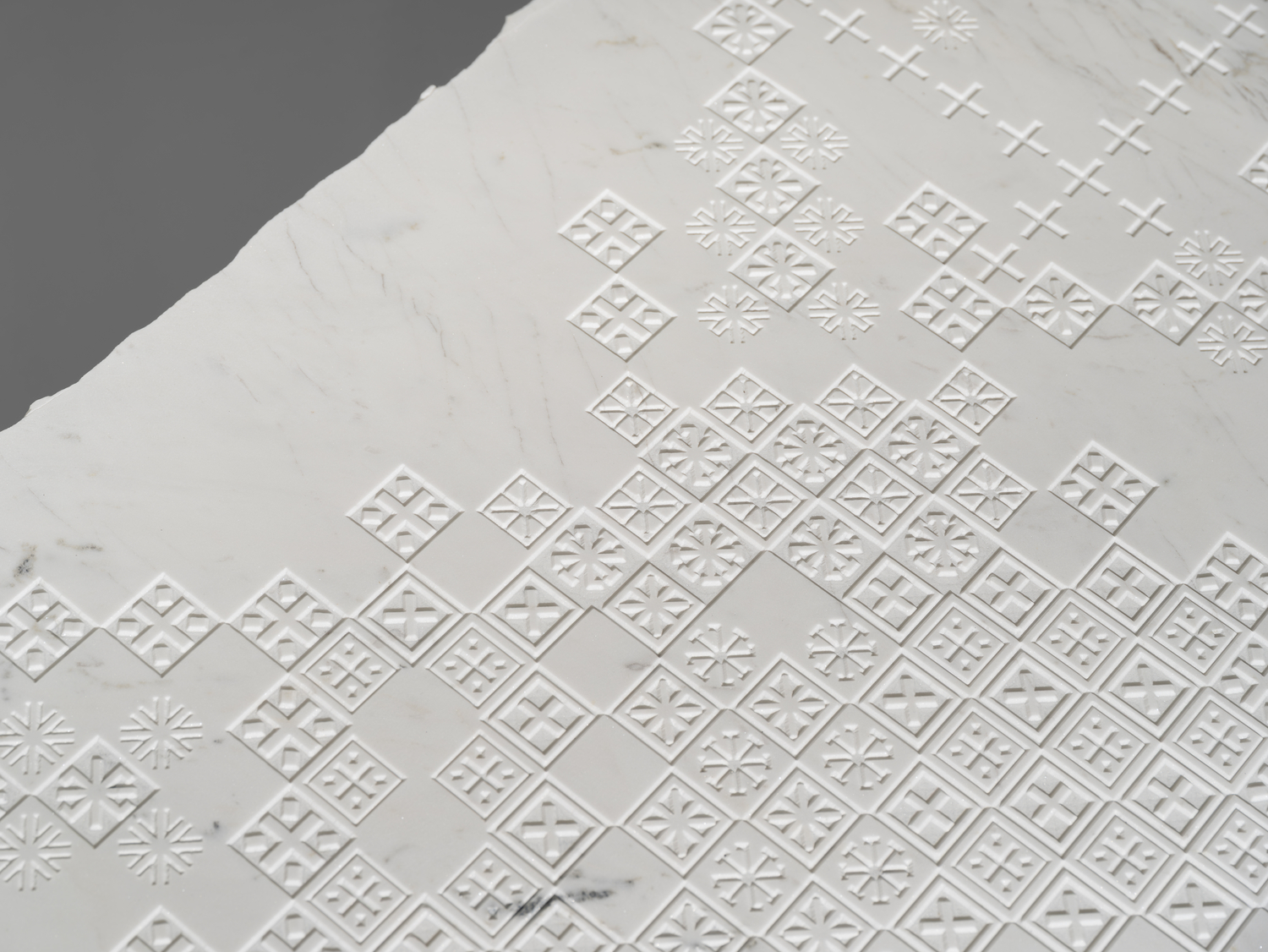
Ding Yi, Appearance of Crosses Stele 2025-2 (detail), 2025, Digital relief on Beijing Fangshan white marble, 240 x 120 x 15 cm, 94 1/2 x 47 1/4 x 5 7/8 in © Ding Yi. Courtesy Lisson Gallery and ShanghART Gallery
Ding Yi
Cosmotechnics: Ding Yi as a Planetary Code
Fondazione Querini Stampalia, Venice
9 May – 22 November 2026
To coincide with the opening of the 61st International Art Exhibition of La Biennale di Venezia, one of China’s most prominent abstractionists, the Shanghai-based artist Ding Yi, presents a major presentation at Fondazione Querini Stampalia. Curated by Alfredo Cramerotti and Auronda Scalera, the exhibition brings together new and historic works that trace the evolution of Ding Yi’s language, alongside a series of stone steles that anchor the exhibition as a place of reflection and ritual, recalling ancient sites across China and Europe. Titled Cosmotechnics – a concept borrowed from philosopher Yuk Hui – the presentation transforms the Area Scarpa into a contemplative forest of images, the works operating like a planetary code with their placement creating a meandering path reminiscent of traditional Chinese gardens. This is Ding Yi’s first time presenting a solo exhibition during La Biennale di Venezia since his participation in the inaugural exhibition of Chinese art at La Biennale in 1993, curated by Achille Bonito Oliva for the 45th International Art Exhibition.
As an intentional departure from the ideological excess of post-Cultural Revolution painting, in 1988 Ding Yi began his Appearance of Crosses series. At a time when Chinese contemporary art was dominated by neo-expressionism and political pop, Ding Yi turned to the grid – not as a neutral device of Western modernism, but as a framework for meaning that was open, relational and generative. Over the decades, his system evolved, expanding into chromatic explorations, fluorescent canvases capturing Shanghai’s urban glow, and eventually sculptural reliefs that introduced shadow and tactility, culminating in projects where viewers could literally walk through the grid.
For Cosmotechnics, Ding Yi brings this inquiry to its most distilled form: twelve black-and-white paintings arranged as a constellation. These panels function as both paintings and contemporary steles, forming a meditative environment that invites the visitor to move slowly and encounter each work from multiple perspectives. The focus on a black-and-white palette marks an important pivot in Ding Yi’s practice: after more than a decade devoted to fluorescent colour, he embraced monochrome as a departure from the saturation of social noise and toward broader questions of time, space and perception. Alongside this, Cosmotechnics also features seven historic works spanning the 1980s to the 2020s, which – seen together – trace Ding Yi’s journey from the disciplined austerity of the late 1980s to a fully expanded cosmotechnical practice, where painting, sculpture, and architecture interpenetrate.
Accompanying these panels are two stone steles, either incised or rendered in relief, carved with Ding Yi’s signature ‘Appearance of Crosses’ motif. These commemorative forms, at once minimal and monumental, situate the paintings within a deeper temporal register, recalling China’s renowned Stele Forest (Beilin) and ancient sites such as Stonehenge, inviting reflection on memory, continuity, and cosmic orientation. These panels also prompt viewers to experience time as simultaneity, as an encounter with history and futurity at once: from classical Chinese ink traditions and memories of industrial Shanghai, to anticipations of the role of technology in our future.
Alfredo Cramerotti and Auronda Scalera, curators, say: “Ding Yi’s Cosmotechnics finds an exact counterpart in Carlo Scarpa’s Area at the Fondazione Querini Stampalia: a modernist instrument of equilibrium designed to live with Venice’s instability rather than deny it. Scarpa measures water, threshold, and passage with the same rigor that Ding Yi applies to the pictorial field. The new monochrome series here is a structural decision, like a register that clears perceptual noise and makes interval and proportion legible. In dialogue with Scarpa, Ding Yi traces a logic of construction in which painting, sculpture, and architecture converge and form a grammar of thresholds, attuned to a city where balance is always negotiated.”
Cristiana Collu, Director of the Fondazione Querini Stampalia, says: “When Carlo Scarpa said he wanted to ‘cut out the blue of the sky,’ he meant that he wanted to render the visual field immediately perceptible, transforming a cosmic element into a bodily encounter through an architectural process; he was speaking poetically, for sure, but also very practically. Ding Yi’s works follow the same principle. Whether stars or cosmic elements are discernible in darkness or concealed in broad daylight, their presence remains constant: only outstanding technique, art and intuition make them always visible. In my reading, they share an architectural syntax, a sort of configuration of points that sustains a latent order, one not readily decipherable, yet perceivable somewhere between wonder and mystery.”
Ding Yi says: “I am honoured to present a series of new works to audiences in Italy and across Europe at the Fondazione Querini Stampalia during the Venice Biennale. The new black-and-white paintings and stone steles reveal the macrocosmic void within the universe of Appearance of Crosses. Twelve basswood paintings of identical dimensions are arranged as a constellation, transforming the exhibition space into a solemn void that invites viewers to contemplate as they wander through the presentation. In juxtaposition, two stone steles bearing relief incisions establish a material and formal dialogue with the engraved marks and brushstrokes of the wooden panels, foregrounding the interplay between painting and sculpture. Solid, still, and silent, these images of steles are not relics; rather, grounded in a practice firmly situated in the present, they respond to the visual structures and temporal measures of the history of civilisation.”
Published by Skira, the volume accompanying Ding Yi: Cosmotechnics is conceived as a critical object in its own right: a book that mirrors the exhibition’s logic of constellation and measured encounter. Bringing together newly commissioned texts, a sustained curatorial dialogue, and a substantial visual corpus – including full installation views within Carlo Scarpa’s Area at the Fondazione Querini Stampalia and a documented selection of works from the 1980s to the 2020s – the publication clarifies how Ding Yi’s monochrome turn reframes his practice through structure, interval, and spatial reciprocity. With rigorous captions, artist chronology, and production notes, it offers both a readable entry point and an enduring scholarly reference, articulating the alignment between Ding Yi’s mark-making and Scarpa’s precision – two practices that transform constraint into equilibrium.
Cosmotechnics: Ding Yi as a Planetary Code is presented by the Fondazione Querini Stampalia with the support of Lisson Gallery and ShanghART Gallery.
Ding Yi
Cosmotechnics: Ding Yi as a Planetary Code
Fondazione Querini Stampalia, Venice
9 May – 22 November 2026
To coincide with the opening of the 61st International Art Exhibition of La Biennale di Venezia, one of China’s most prominent abstractionists, the Shanghai-based artist Ding Yi, presents a major presentation at Fondazione Querini Stampalia. Curated by Alfredo Cramerotti and Auronda Scalera, the exhibition brings together new and historic works that trace the evolution of Ding Yi’s language, alongside a series of stone steles that anchor the exhibition as a place of reflection and ritual, recalling ancient sites across China and Europe. Titled Cosmotechnics – a concept borrowed from philosopher Yuk Hui – the presentation transforms the Area Scarpa into a contemplative forest of images, the works operating like a planetary code with their placement creating a meandering path reminiscent of traditional Chinese gardens. This is Ding Yi’s first time presenting a solo exhibition during La Biennale di Venezia since his participation in the inaugural exhibition of Chinese art at La Biennale in 1993, curated by Achille Bonito Oliva for the 45th International Art Exhibition.
As an intentional departure from the ideological excess of post-Cultural Revolution painting, in 1988 Ding Yi began his Appearance of Crosses series. At a time when Chinese contemporary art was dominated by neo-expressionism and political pop, Ding Yi turned to the grid – not as a neutral device of Western modernism, but as a framework for meaning that was open, relational and generative. Over the decades, his system evolved, expanding into chromatic explorations, fluorescent canvases capturing Shanghai’s urban glow, and eventually sculptural reliefs that introduced shadow and tactility, culminating in projects where viewers could literally walk through the grid.
For Cosmotechnics, Ding Yi brings this inquiry to its most distilled form: twelve black-and-white paintings arranged as a constellation. These panels function as both paintings and contemporary steles, forming a meditative environment that invites the visitor to move slowly and encounter each work from multiple perspectives. The focus on a black-and-white palette marks an important pivot in Ding Yi’s practice: after more than a decade devoted to fluorescent colour, he embraced monochrome as a departure from the saturation of social noise and toward broader questions of time, space and perception. Alongside this, Cosmotechnics also features seven historic works spanning the 1980s to the 2020s, which – seen together – trace Ding Yi’s journey from the disciplined austerity of the late 1980s to a fully expanded cosmotechnical practice, where painting, sculpture, and architecture interpenetrate.
Accompanying these panels are two stone steles, either incised or rendered in relief, carved with Ding Yi’s signature ‘Appearance of Crosses’ motif. These commemorative forms, at once minimal and monumental, situate the paintings within a deeper temporal register, recalling China’s renowned Stele Forest (Beilin) and ancient sites such as Stonehenge, inviting reflection on memory, continuity, and cosmic orientation. These panels also prompt viewers to experience time as simultaneity, as an encounter with history and futurity at once: from classical Chinese ink traditions and memories of industrial Shanghai, to anticipations of the role of technology in our future.
Alfredo Cramerotti and Auronda Scalera, curators, say: “Ding Yi’s Cosmotechnics finds an exact counterpart in Carlo Scarpa’s Area at the Fondazione Querini Stampalia: a modernist instrument of equilibrium designed to live with Venice’s instability rather than deny it. Scarpa measures water, threshold, and passage with the same rigor that Ding Yi applies to the pictorial field. The new monochrome series here is a structural decision, like a register that clears perceptual noise and makes interval and proportion legible. In dialogue with Scarpa, Ding Yi traces a logic of construction in which painting, sculpture, and architecture converge and form a grammar of thresholds, attuned to a city where balance is always negotiated.”
Cristiana Collu, Director of the Fondazione Querini Stampalia, says: “When Carlo Scarpa said he wanted to ‘cut out the blue of the sky,’ he meant that he wanted to render the visual field immediately perceptible, transforming a cosmic element into a bodily encounter through an architectural process; he was speaking poetically, for sure, but also very practically. Ding Yi’s works follow the same principle. Whether stars or cosmic elements are discernible in darkness or concealed in broad daylight, their presence remains constant: only outstanding technique, art and intuition make them always visible. In my reading, they share an architectural syntax, a sort of configuration of points that sustains a latent order, one not readily decipherable, yet perceivable somewhere between wonder and mystery.”
Ding Yi says: “I am honoured to present a series of new works to audiences in Italy and across Europe at the Fondazione Querini Stampalia during the Venice Biennale. The new black-and-white paintings and stone steles reveal the macrocosmic void within the universe of Appearance of Crosses. Twelve basswood paintings of identical dimensions are arranged as a constellation, transforming the exhibition space into a solemn void that invites viewers to contemplate as they wander through the presentation. In juxtaposition, two stone steles bearing relief incisions establish a material and formal dialogue with the engraved marks and brushstrokes of the wooden panels, foregrounding the interplay between painting and sculpture. Solid, still, and silent, these images of steles are not relics; rather, grounded in a practice firmly situated in the present, they respond to the visual structures and temporal measures of the history of civilisation.”
Published by Skira, the volume accompanying Ding Yi: Cosmotechnics is conceived as a critical object in its own right: a book that mirrors the exhibition’s logic of constellation and measured encounter. Bringing together newly commissioned texts, a sustained curatorial dialogue, and a substantial visual corpus – including full installation views within Carlo Scarpa’s Area at the Fondazione Querini Stampalia and a documented selection of works from the 1980s to the 2020s – the publication clarifies how Ding Yi’s monochrome turn reframes his practice through structure, interval, and spatial reciprocity. With rigorous captions, artist chronology, and production notes, it offers both a readable entry point and an enduring scholarly reference, articulating the alignment between Ding Yi’s mark-making and Scarpa’s precision – two practices that transform constraint into equilibrium.
Cosmotechnics: Ding Yi as a Planetary Code is presented by the Fondazione Querini Stampalia with the support of Lisson Gallery and ShanghART Gallery.
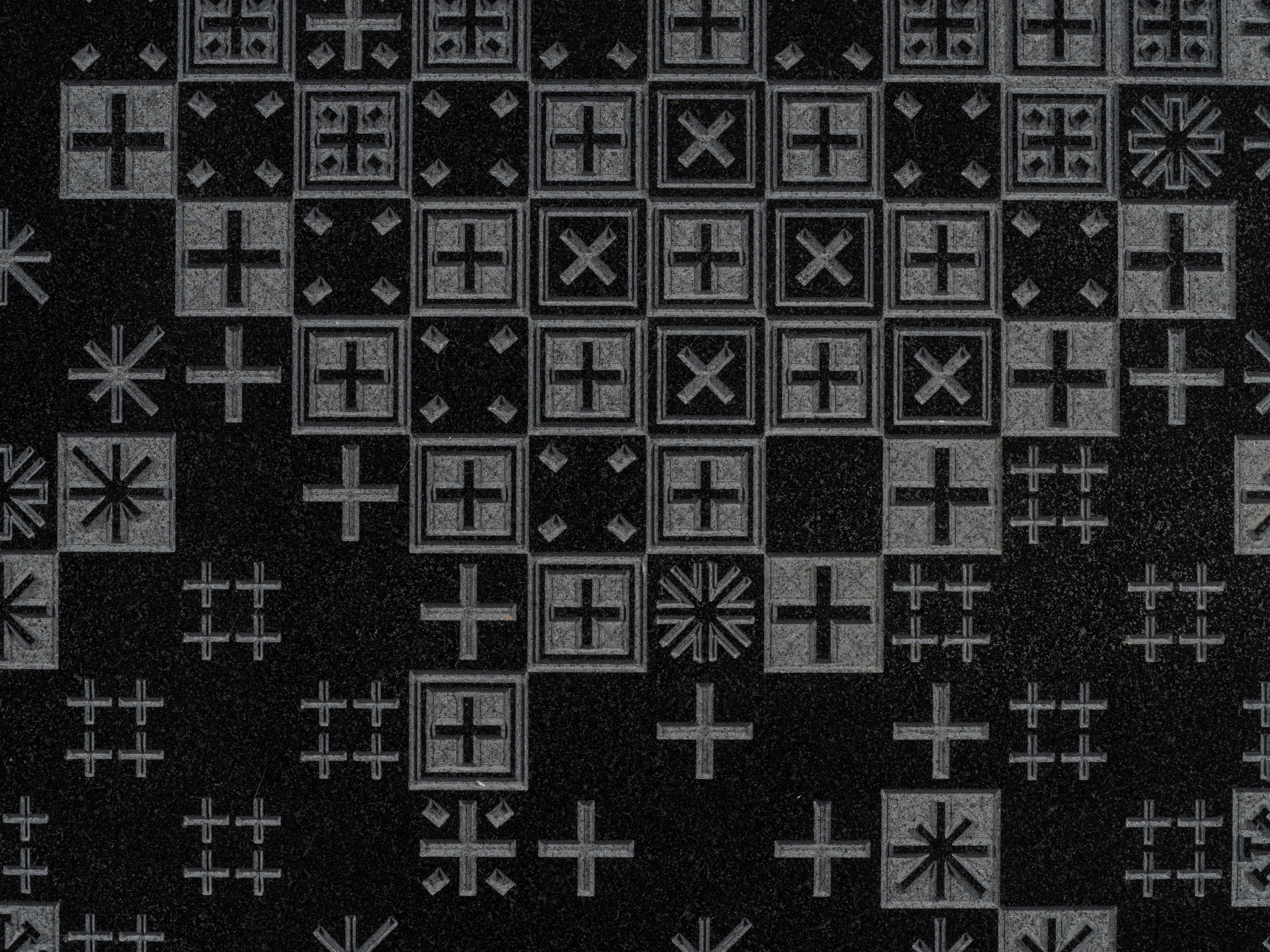
Ding Yi, Appearance of Crosses Stele 2025-1 (detail), 2025, Digital relief on Shanxi black granite, 240 x 120 x 15 cm, 94 1/2 x 47 1/4 x 5 7/8 in © Ding Yi. Courtesy Lisson Gallery and ShanghART Gallery
Ding Yi
Cosmotechnics: Ding Yi as a Planetary Code
Fondazione Querini Stampalia, Venice
9 May – 22 November 2026
To coincide with the opening of the 61st International Art Exhibition of La Biennale di Venezia, one of China’s most prominent abstractionists, the Shanghai-based artist Ding Yi, presents a major presentation at Fondazione Querini Stampalia. Curated by Alfredo Cramerotti and Auronda Scalera, the exhibition brings together new and historic works that trace the evolution of Ding Yi’s language, alongside a series of stone steles that anchor the exhibition as a place of reflection and ritual, recalling ancient sites across China and Europe. Titled Cosmotechnics – a concept borrowed from philosopher Yuk Hui – the presentation transforms the Area Scarpa into a contemplative forest of images, the works operating like a planetary code with their placement creating a meandering path reminiscent of traditional Chinese gardens. This is Ding Yi’s first time presenting a solo exhibition during La Biennale di Venezia since his participation in the inaugural exhibition of Chinese art at La Biennale in 1993, curated by Achille Bonito Oliva for the 45th International Art Exhibition.
As an intentional departure from the ideological excess of post-Cultural Revolution painting, in 1988 Ding Yi began his Appearance of Crosses series. At a time when Chinese contemporary art was dominated by neo-expressionism and political pop, Ding Yi turned to the grid – not as a neutral device of Western modernism, but as a framework for meaning that was open, relational and generative. Over the decades, his system evolved, expanding into chromatic explorations, fluorescent canvases capturing Shanghai’s urban glow, and eventually sculptural reliefs that introduced shadow and tactility, culminating in projects where viewers could literally walk through the grid.
For Cosmotechnics, Ding Yi brings this inquiry to its most distilled form: twelve black-and-white paintings arranged as a constellation. These panels function as both paintings and contemporary steles, forming a meditative environment that invites the visitor to move slowly and encounter each work from multiple perspectives. The focus on a black-and-white palette marks an important pivot in Ding Yi’s practice: after more than a decade devoted to fluorescent colour, he embraced monochrome as a departure from the saturation of social noise and toward broader questions of time, space and perception. Alongside this, Cosmotechnics also features seven historic works spanning the 1980s to the 2020s, which – seen together – trace Ding Yi’s journey from the disciplined austerity of the late 1980s to a fully expanded cosmotechnical practice, where painting, sculpture, and architecture interpenetrate.
Accompanying these panels are two stone steles, either incised or rendered in relief, carved with Ding Yi’s signature ‘Appearance of Crosses’ motif. These commemorative forms, at once minimal and monumental, situate the paintings within a deeper temporal register, recalling China’s renowned Stele Forest (Beilin) and ancient sites such as Stonehenge, inviting reflection on memory, continuity, and cosmic orientation. These panels also prompt viewers to experience time as simultaneity, as an encounter with history and futurity at once: from classical Chinese ink traditions and memories of industrial Shanghai, to anticipations of the role of technology in our future.
Alfredo Cramerotti and Auronda Scalera, curators, say: “Ding Yi’s Cosmotechnics finds an exact counterpart in Carlo Scarpa’s Area at the Fondazione Querini Stampalia: a modernist instrument of equilibrium designed to live with Venice’s instability rather than deny it. Scarpa measures water, threshold, and passage with the same rigor that Ding Yi applies to the pictorial field. The new monochrome series here is a structural decision, like a register that clears perceptual noise and makes interval and proportion legible. In dialogue with Scarpa, Ding Yi traces a logic of construction in which painting, sculpture, and architecture converge and form a grammar of thresholds, attuned to a city where balance is always negotiated.”
Cristiana Collu, Director of the Fondazione Querini Stampalia, says: “When Carlo Scarpa said he wanted to ‘cut out the blue of the sky,’ he meant that he wanted to render the visual field immediately perceptible, transforming a cosmic element into a bodily encounter through an architectural process; he was speaking poetically, for sure, but also very practically. Ding Yi’s works follow the same principle. Whether stars or cosmic elements are discernible in darkness or concealed in broad daylight, their presence remains constant: only outstanding technique, art and intuition make them always visible. In my reading, they share an architectural syntax, a sort of configuration of points that sustains a latent order, one not readily decipherable, yet perceivable somewhere between wonder and mystery.”
Ding Yi says: “I am honoured to present a series of new works to audiences in Italy and across Europe at the Fondazione Querini Stampalia during the Venice Biennale. The new black-and-white paintings and stone steles reveal the macrocosmic void within the universe of Appearance of Crosses. Twelve basswood paintings of identical dimensions are arranged as a constellation, transforming the exhibition space into a solemn void that invites viewers to contemplate as they wander through the presentation. In juxtaposition, two stone steles bearing relief incisions establish a material and formal dialogue with the engraved marks and brushstrokes of the wooden panels, foregrounding the interplay between painting and sculpture. Solid, still, and silent, these images of steles are not relics; rather, grounded in a practice firmly situated in the present, they respond to the visual structures and temporal measures of the history of civilisation.”
Published by Skira, the volume accompanying Ding Yi: Cosmotechnics is conceived as a critical object in its own right: a book that mirrors the exhibition’s logic of constellation and measured encounter. Bringing together newly commissioned texts, a sustained curatorial dialogue, and a substantial visual corpus – including full installation views within Carlo Scarpa’s Area at the Fondazione Querini Stampalia and a documented selection of works from the 1980s to the 2020s – the publication clarifies how Ding Yi’s monochrome turn reframes his practice through structure, interval, and spatial reciprocity. With rigorous captions, artist chronology, and production notes, it offers both a readable entry point and an enduring scholarly reference, articulating the alignment between Ding Yi’s mark-making and Scarpa’s precision – two practices that transform constraint into equilibrium.
Cosmotechnics: Ding Yi as a Planetary Code is presented by the Fondazione Querini Stampalia with the support of Lisson Gallery and ShanghART Gallery.
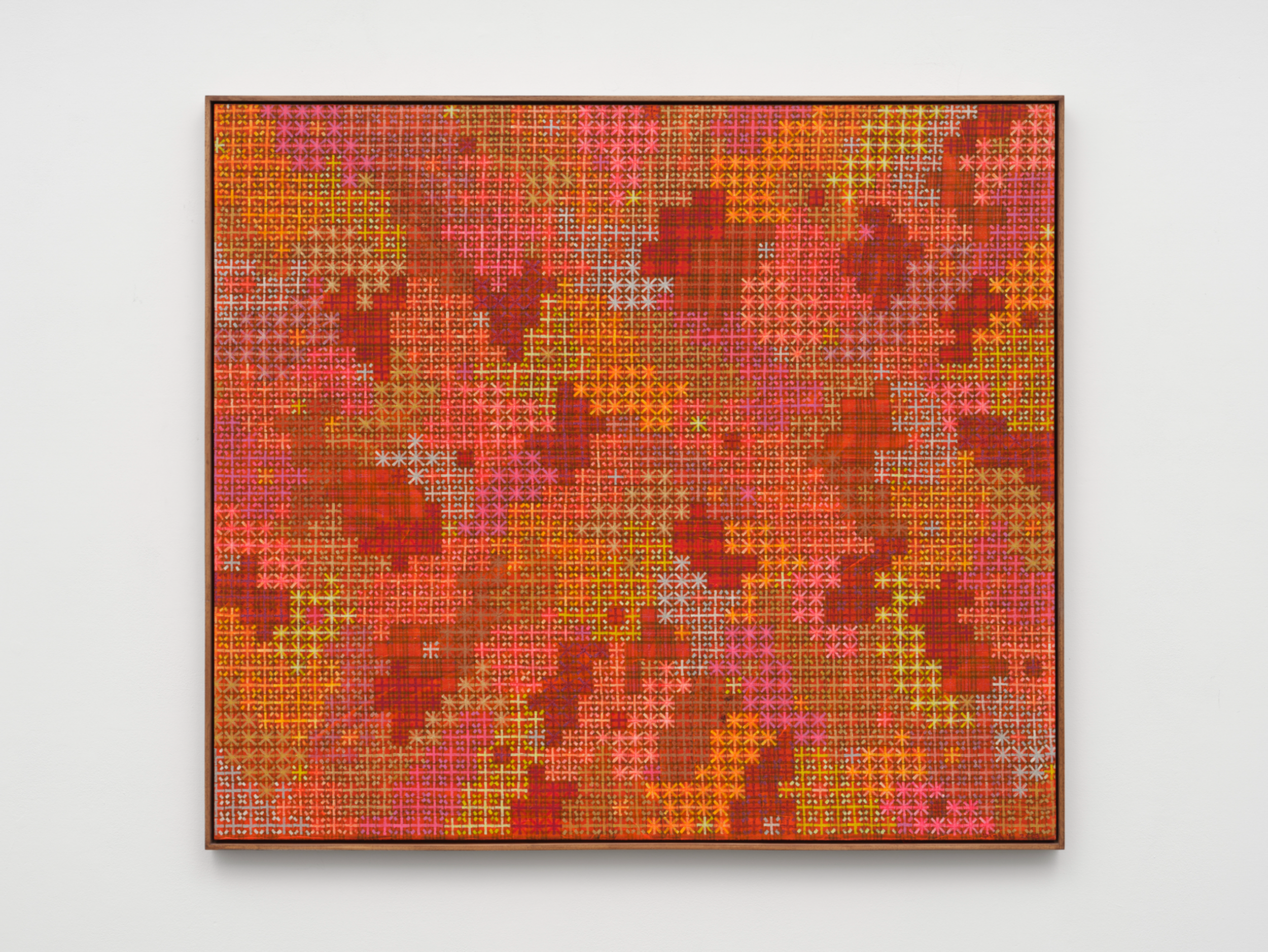
Ding Yi, Appearance of Crosses 2003-9, 2003, Acrylic on tartan, 140 x 160 cm, 55 1/8 x 63 in © Ding Yi. Courtesy Lisson Gallery and ShanghART Gallery
Ding Yi
Cosmotechnics: Ding Yi as a Planetary Code
Fondazione Querini Stampalia, Venice
9 May – 22 November 2026
To coincide with the opening of the 61st International Art Exhibition of La Biennale di Venezia, one of China’s most prominent abstractionists, the Shanghai-based artist Ding Yi, presents a major presentation at Fondazione Querini Stampalia. Curated by Alfredo Cramerotti and Auronda Scalera, the exhibition brings together new and historic works that trace the evolution of Ding Yi’s language, alongside a series of stone steles that anchor the exhibition as a place of reflection and ritual, recalling ancient sites across China and Europe. Titled Cosmotechnics – a concept borrowed from philosopher Yuk Hui – the presentation transforms the Area Scarpa into a contemplative forest of images, the works operating like a planetary code with their placement creating a meandering path reminiscent of traditional Chinese gardens. This is Ding Yi’s first time presenting a solo exhibition during La Biennale di Venezia since his participation in the inaugural exhibition of Chinese art at La Biennale in 1993, curated by Achille Bonito Oliva for the 45th International Art Exhibition.
As an intentional departure from the ideological excess of post-Cultural Revolution painting, in 1988 Ding Yi began his Appearance of Crosses series. At a time when Chinese contemporary art was dominated by neo-expressionism and political pop, Ding Yi turned to the grid – not as a neutral device of Western modernism, but as a framework for meaning that was open, relational and generative. Over the decades, his system evolved, expanding into chromatic explorations, fluorescent canvases capturing Shanghai’s urban glow, and eventually sculptural reliefs that introduced shadow and tactility, culminating in projects where viewers could literally walk through the grid.
For Cosmotechnics, Ding Yi brings this inquiry to its most distilled form: twelve black-and-white paintings arranged as a constellation. These panels function as both paintings and contemporary steles, forming a meditative environment that invites the visitor to move slowly and encounter each work from multiple perspectives. The focus on a black-and-white palette marks an important pivot in Ding Yi’s practice: after more than a decade devoted to fluorescent colour, he embraced monochrome as a departure from the saturation of social noise and toward broader questions of time, space and perception. Alongside this, Cosmotechnics also features seven historic works spanning the 1980s to the 2020s, which – seen together – trace Ding Yi’s journey from the disciplined austerity of the late 1980s to a fully expanded cosmotechnical practice, where painting, sculpture, and architecture interpenetrate.
Accompanying these panels are two stone steles, either incised or rendered in relief, carved with Ding Yi’s signature ‘Appearance of Crosses’ motif. These commemorative forms, at once minimal and monumental, situate the paintings within a deeper temporal register, recalling China’s renowned Stele Forest (Beilin) and ancient sites such as Stonehenge, inviting reflection on memory, continuity, and cosmic orientation. These panels also prompt viewers to experience time as simultaneity, as an encounter with history and futurity at once: from classical Chinese ink traditions and memories of industrial Shanghai, to anticipations of the role of technology in our future.
Alfredo Cramerotti and Auronda Scalera, curators, say: “Ding Yi’s Cosmotechnics finds an exact counterpart in Carlo Scarpa’s Area at the Fondazione Querini Stampalia: a modernist instrument of equilibrium designed to live with Venice’s instability rather than deny it. Scarpa measures water, threshold, and passage with the same rigor that Ding Yi applies to the pictorial field. The new monochrome series here is a structural decision, like a register that clears perceptual noise and makes interval and proportion legible. In dialogue with Scarpa, Ding Yi traces a logic of construction in which painting, sculpture, and architecture converge and form a grammar of thresholds, attuned to a city where balance is always negotiated.”
Cristiana Collu, Director of the Fondazione Querini Stampalia, says: “When Carlo Scarpa said he wanted to ‘cut out the blue of the sky,’ he meant that he wanted to render the visual field immediately perceptible, transforming a cosmic element into a bodily encounter through an architectural process; he was speaking poetically, for sure, but also very practically. Ding Yi’s works follow the same principle. Whether stars or cosmic elements are discernible in darkness or concealed in broad daylight, their presence remains constant: only outstanding technique, art and intuition make them always visible. In my reading, they share an architectural syntax, a sort of configuration of points that sustains a latent order, one not readily decipherable, yet perceivable somewhere between wonder and mystery.”
Ding Yi says: “I am honoured to present a series of new works to audiences in Italy and across Europe at the Fondazione Querini Stampalia during the Venice Biennale. The new black-and-white paintings and stone steles reveal the macrocosmic void within the universe of Appearance of Crosses. Twelve basswood paintings of identical dimensions are arranged as a constellation, transforming the exhibition space into a solemn void that invites viewers to contemplate as they wander through the presentation. In juxtaposition, two stone steles bearing relief incisions establish a material and formal dialogue with the engraved marks and brushstrokes of the wooden panels, foregrounding the interplay between painting and sculpture. Solid, still, and silent, these images of steles are not relics; rather, grounded in a practice firmly situated in the present, they respond to the visual structures and temporal measures of the history of civilisation.”
Published by Skira, the volume accompanying Ding Yi: Cosmotechnics is conceived as a critical object in its own right: a book that mirrors the exhibition’s logic of constellation and measured encounter. Bringing together newly commissioned texts, a sustained curatorial dialogue, and a substantial visual corpus – including full installation views within Carlo Scarpa’s Area at the Fondazione Querini Stampalia and a documented selection of works from the 1980s to the 2020s – the publication clarifies how Ding Yi’s monochrome turn reframes his practice through structure, interval, and spatial reciprocity. With rigorous captions, artist chronology, and production notes, it offers both a readable entry point and an enduring scholarly reference, articulating the alignment between Ding Yi’s mark-making and Scarpa’s precision – two practices that transform constraint into equilibrium.
Cosmotechnics: Ding Yi as a Planetary Code is presented by the Fondazione Querini Stampalia with the support of Lisson Gallery and ShanghART Gallery.
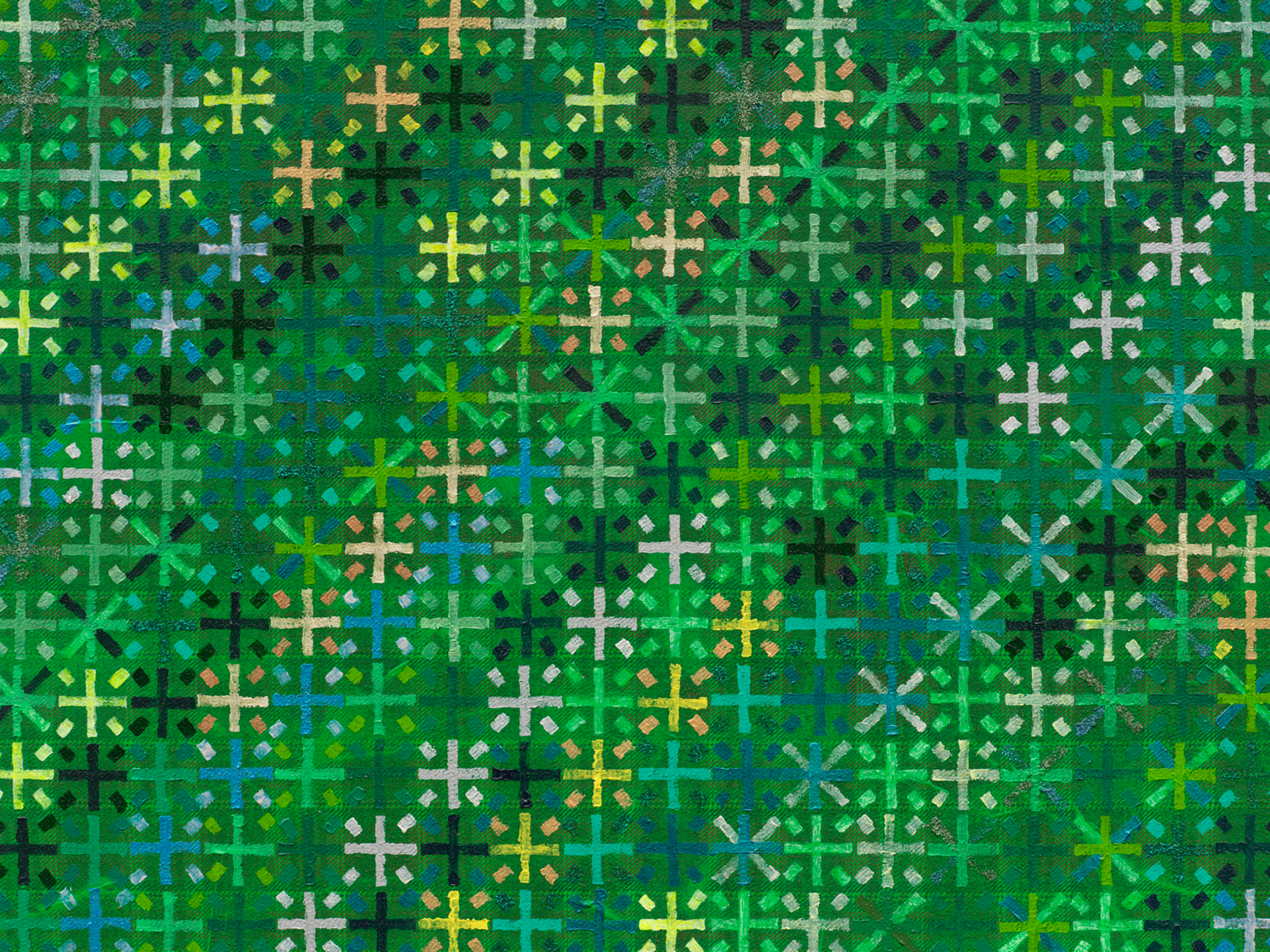
Ding Yi, Appearance of Crosses 2024-12 (detail), 2024, Acrylic and woodcuts on basswood, 120 x 120 cm, 47 1/4 x 47 1/4 in © Ding Yi. Courtesy Lisson Gallery and ShanghART Gallery
Ding Yi
Cosmotechnics: Ding Yi as a Planetary Code
Fondazione Querini Stampalia, Venice
9 May – 22 November 2026
To coincide with the opening of the 61st International Art Exhibition of La Biennale di Venezia, one of China’s most prominent abstractionists, the Shanghai-based artist Ding Yi, presents a major presentation at Fondazione Querini Stampalia. Curated by Alfredo Cramerotti and Auronda Scalera, the exhibition brings together new and historic works that trace the evolution of Ding Yi’s language, alongside a series of stone steles that anchor the exhibition as a place of reflection and ritual, recalling ancient sites across China and Europe. Titled Cosmotechnics – a concept borrowed from philosopher Yuk Hui – the presentation transforms the Area Scarpa into a contemplative forest of images, the works operating like a planetary code with their placement creating a meandering path reminiscent of traditional Chinese gardens. This is Ding Yi’s first time presenting a solo exhibition during La Biennale di Venezia since his participation in the inaugural exhibition of Chinese art at La Biennale in 1993, curated by Achille Bonito Oliva for the 45th International Art Exhibition.
As an intentional departure from the ideological excess of post-Cultural Revolution painting, in 1988 Ding Yi began his Appearance of Crosses series. At a time when Chinese contemporary art was dominated by neo-expressionism and political pop, Ding Yi turned to the grid – not as a neutral device of Western modernism, but as a framework for meaning that was open, relational and generative. Over the decades, his system evolved, expanding into chromatic explorations, fluorescent canvases capturing Shanghai’s urban glow, and eventually sculptural reliefs that introduced shadow and tactility, culminating in projects where viewers could literally walk through the grid.
For Cosmotechnics, Ding Yi brings this inquiry to its most distilled form: twelve black-and-white paintings arranged as a constellation. These panels function as both paintings and contemporary steles, forming a meditative environment that invites the visitor to move slowly and encounter each work from multiple perspectives. The focus on a black-and-white palette marks an important pivot in Ding Yi’s practice: after more than a decade devoted to fluorescent colour, he embraced monochrome as a departure from the saturation of social noise and toward broader questions of time, space and perception. Alongside this, Cosmotechnics also features seven historic works spanning the 1980s to the 2020s, which – seen together – trace Ding Yi’s journey from the disciplined austerity of the late 1980s to a fully expanded cosmotechnical practice, where painting, sculpture, and architecture interpenetrate.
Accompanying these panels are two stone steles, either incised or rendered in relief, carved with Ding Yi’s signature ‘Appearance of Crosses’ motif. These commemorative forms, at once minimal and monumental, situate the paintings within a deeper temporal register, recalling China’s renowned Stele Forest (Beilin) and ancient sites such as Stonehenge, inviting reflection on memory, continuity, and cosmic orientation. These panels also prompt viewers to experience time as simultaneity, as an encounter with history and futurity at once: from classical Chinese ink traditions and memories of industrial Shanghai, to anticipations of the role of technology in our future.
Alfredo Cramerotti and Auronda Scalera, curators, say: “Ding Yi’s Cosmotechnics finds an exact counterpart in Carlo Scarpa’s Area at the Fondazione Querini Stampalia: a modernist instrument of equilibrium designed to live with Venice’s instability rather than deny it. Scarpa measures water, threshold, and passage with the same rigor that Ding Yi applies to the pictorial field. The new monochrome series here is a structural decision, like a register that clears perceptual noise and makes interval and proportion legible. In dialogue with Scarpa, Ding Yi traces a logic of construction in which painting, sculpture, and architecture converge and form a grammar of thresholds, attuned to a city where balance is always negotiated.”
Cristiana Collu, Director of the Fondazione Querini Stampalia, says: “When Carlo Scarpa said he wanted to ‘cut out the blue of the sky,’ he meant that he wanted to render the visual field immediately perceptible, transforming a cosmic element into a bodily encounter through an architectural process; he was speaking poetically, for sure, but also very practically. Ding Yi’s works follow the same principle. Whether stars or cosmic elements are discernible in darkness or concealed in broad daylight, their presence remains constant: only outstanding technique, art and intuition make them always visible. In my reading, they share an architectural syntax, a sort of configuration of points that sustains a latent order, one not readily decipherable, yet perceivable somewhere between wonder and mystery.”
Ding Yi says: “I am honoured to present a series of new works to audiences in Italy and across Europe at the Fondazione Querini Stampalia during the Venice Biennale. The new black-and-white paintings and stone steles reveal the macrocosmic void within the universe of Appearance of Crosses. Twelve basswood paintings of identical dimensions are arranged as a constellation, transforming the exhibition space into a solemn void that invites viewers to contemplate as they wander through the presentation. In juxtaposition, two stone steles bearing relief incisions establish a material and formal dialogue with the engraved marks and brushstrokes of the wooden panels, foregrounding the interplay between painting and sculpture. Solid, still, and silent, these images of steles are not relics; rather, grounded in a practice firmly situated in the present, they respond to the visual structures and temporal measures of the history of civilisation.”
Published by Skira, the volume accompanying Ding Yi: Cosmotechnics is conceived as a critical object in its own right: a book that mirrors the exhibition’s logic of constellation and measured encounter. Bringing together newly commissioned texts, a sustained curatorial dialogue, and a substantial visual corpus – including full installation views within Carlo Scarpa’s Area at the Fondazione Querini Stampalia and a documented selection of works from the 1980s to the 2020s – the publication clarifies how Ding Yi’s monochrome turn reframes his practice through structure, interval, and spatial reciprocity. With rigorous captions, artist chronology, and production notes, it offers both a readable entry point and an enduring scholarly reference, articulating the alignment between Ding Yi’s mark-making and Scarpa’s precision – two practices that transform constraint into equilibrium.
Cosmotechnics: Ding Yi as a Planetary Code is presented by the Fondazione Querini Stampalia with the support of Lisson Gallery and ShanghART Gallery.
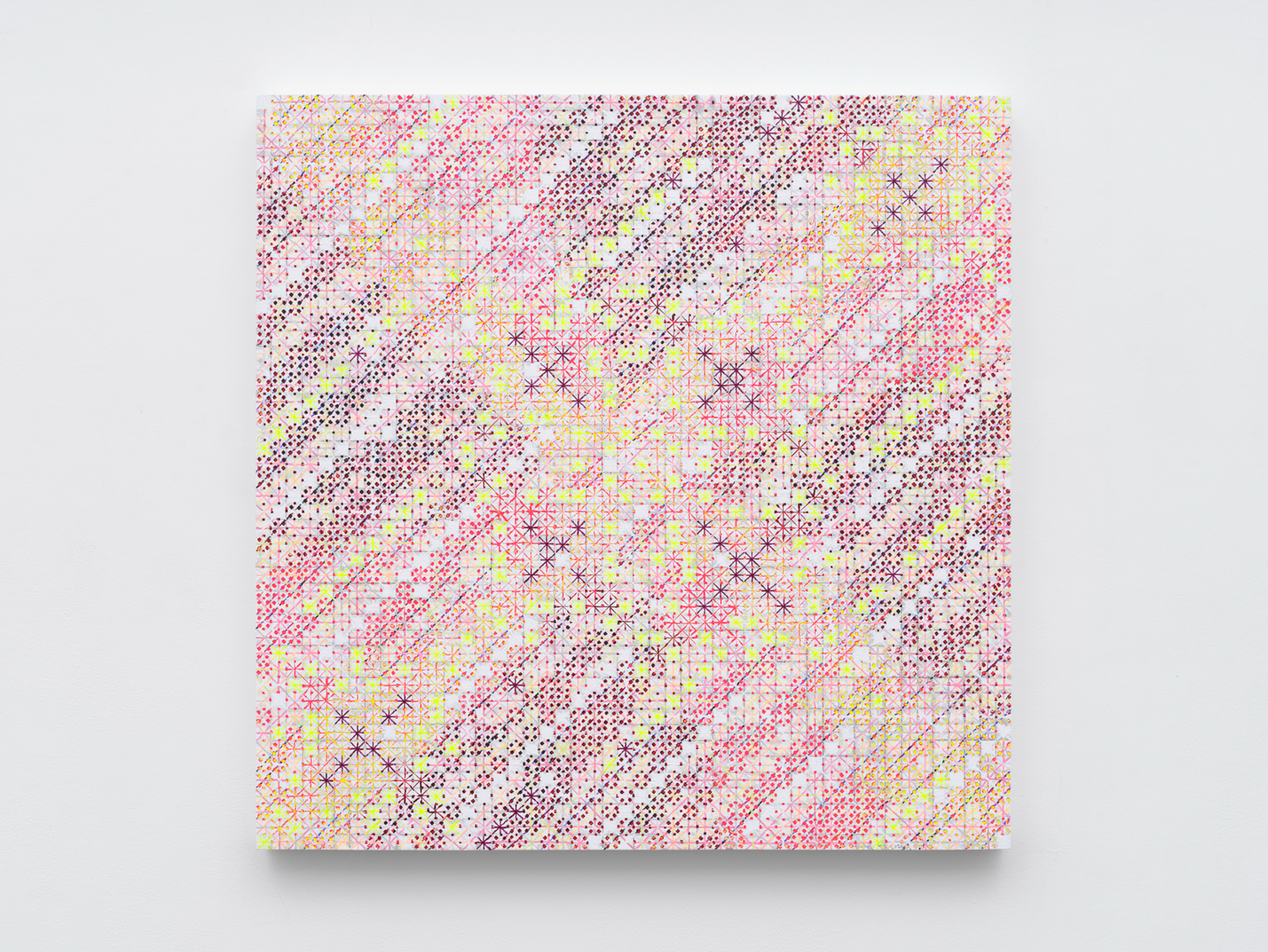
Ding Yi, Appearance of Crosses 2021-7, 2021, Acrylic and woodcuts on basswood, 120 x 120 cm, 47 1/4 x 47 1/4 in © Ding Yi. Courtesy Lisson Gallery and ShanghART Gallery
Ding Yi
Cosmotechnics: Ding Yi as a Planetary Code
Fondazione Querini Stampalia, Venice
9 May – 22 November 2026
To coincide with the opening of the 61st International Art Exhibition of La Biennale di Venezia, one of China’s most prominent abstractionists, the Shanghai-based artist Ding Yi, presents a major presentation at Fondazione Querini Stampalia. Curated by Alfredo Cramerotti and Auronda Scalera, the exhibition brings together new and historic works that trace the evolution of Ding Yi’s language, alongside a series of stone steles that anchor the exhibition as a place of reflection and ritual, recalling ancient sites across China and Europe. Titled Cosmotechnics – a concept borrowed from philosopher Yuk Hui – the presentation transforms the Area Scarpa into a contemplative forest of images, the works operating like a planetary code with their placement creating a meandering path reminiscent of traditional Chinese gardens. This is Ding Yi’s first time presenting a solo exhibition during La Biennale di Venezia since his participation in the inaugural exhibition of Chinese art at La Biennale in 1993, curated by Achille Bonito Oliva for the 45th International Art Exhibition.
As an intentional departure from the ideological excess of post-Cultural Revolution painting, in 1988 Ding Yi began his Appearance of Crosses series. At a time when Chinese contemporary art was dominated by neo-expressionism and political pop, Ding Yi turned to the grid – not as a neutral device of Western modernism, but as a framework for meaning that was open, relational and generative. Over the decades, his system evolved, expanding into chromatic explorations, fluorescent canvases capturing Shanghai’s urban glow, and eventually sculptural reliefs that introduced shadow and tactility, culminating in projects where viewers could literally walk through the grid.
For Cosmotechnics, Ding Yi brings this inquiry to its most distilled form: twelve black-and-white paintings arranged as a constellation. These panels function as both paintings and contemporary steles, forming a meditative environment that invites the visitor to move slowly and encounter each work from multiple perspectives. The focus on a black-and-white palette marks an important pivot in Ding Yi’s practice: after more than a decade devoted to fluorescent colour, he embraced monochrome as a departure from the saturation of social noise and toward broader questions of time, space and perception. Alongside this, Cosmotechnics also features seven historic works spanning the 1980s to the 2020s, which – seen together – trace Ding Yi’s journey from the disciplined austerity of the late 1980s to a fully expanded cosmotechnical practice, where painting, sculpture, and architecture interpenetrate.
Accompanying these panels are two stone steles, either incised or rendered in relief, carved with Ding Yi’s signature ‘Appearance of Crosses’ motif. These commemorative forms, at once minimal and monumental, situate the paintings within a deeper temporal register, recalling China’s renowned Stele Forest (Beilin) and ancient sites such as Stonehenge, inviting reflection on memory, continuity, and cosmic orientation. These panels also prompt viewers to experience time as simultaneity, as an encounter with history and futurity at once: from classical Chinese ink traditions and memories of industrial Shanghai, to anticipations of the role of technology in our future.
Alfredo Cramerotti and Auronda Scalera, curators, say: “Ding Yi’s Cosmotechnics finds an exact counterpart in Carlo Scarpa’s Area at the Fondazione Querini Stampalia: a modernist instrument of equilibrium designed to live with Venice’s instability rather than deny it. Scarpa measures water, threshold, and passage with the same rigor that Ding Yi applies to the pictorial field. The new monochrome series here is a structural decision, like a register that clears perceptual noise and makes interval and proportion legible. In dialogue with Scarpa, Ding Yi traces a logic of construction in which painting, sculpture, and architecture converge and form a grammar of thresholds, attuned to a city where balance is always negotiated.”
Cristiana Collu, Director of the Fondazione Querini Stampalia, says: “When Carlo Scarpa said he wanted to ‘cut out the blue of the sky,’ he meant that he wanted to render the visual field immediately perceptible, transforming a cosmic element into a bodily encounter through an architectural process; he was speaking poetically, for sure, but also very practically. Ding Yi’s works follow the same principle. Whether stars or cosmic elements are discernible in darkness or concealed in broad daylight, their presence remains constant: only outstanding technique, art and intuition make them always visible. In my reading, they share an architectural syntax, a sort of configuration of points that sustains a latent order, one not readily decipherable, yet perceivable somewhere between wonder and mystery.”
Ding Yi says: “I am honoured to present a series of new works to audiences in Italy and across Europe at the Fondazione Querini Stampalia during the Venice Biennale. The new black-and-white paintings and stone steles reveal the macrocosmic void within the universe of Appearance of Crosses. Twelve basswood paintings of identical dimensions are arranged as a constellation, transforming the exhibition space into a solemn void that invites viewers to contemplate as they wander through the presentation. In juxtaposition, two stone steles bearing relief incisions establish a material and formal dialogue with the engraved marks and brushstrokes of the wooden panels, foregrounding the interplay between painting and sculpture. Solid, still, and silent, these images of steles are not relics; rather, grounded in a practice firmly situated in the present, they respond to the visual structures and temporal measures of the history of civilisation.”
Published by Skira, the volume accompanying Ding Yi: Cosmotechnics is conceived as a critical object in its own right: a book that mirrors the exhibition’s logic of constellation and measured encounter. Bringing together newly commissioned texts, a sustained curatorial dialogue, and a substantial visual corpus – including full installation views within Carlo Scarpa’s Area at the Fondazione Querini Stampalia and a documented selection of works from the 1980s to the 2020s – the publication clarifies how Ding Yi’s monochrome turn reframes his practice through structure, interval, and spatial reciprocity. With rigorous captions, artist chronology, and production notes, it offers both a readable entry point and an enduring scholarly reference, articulating the alignment between Ding Yi’s mark-making and Scarpa’s precision – two practices that transform constraint into equilibrium.
Cosmotechnics: Ding Yi as a Planetary Code is presented by the Fondazione Querini Stampalia with the support of Lisson Gallery and ShanghART Gallery.
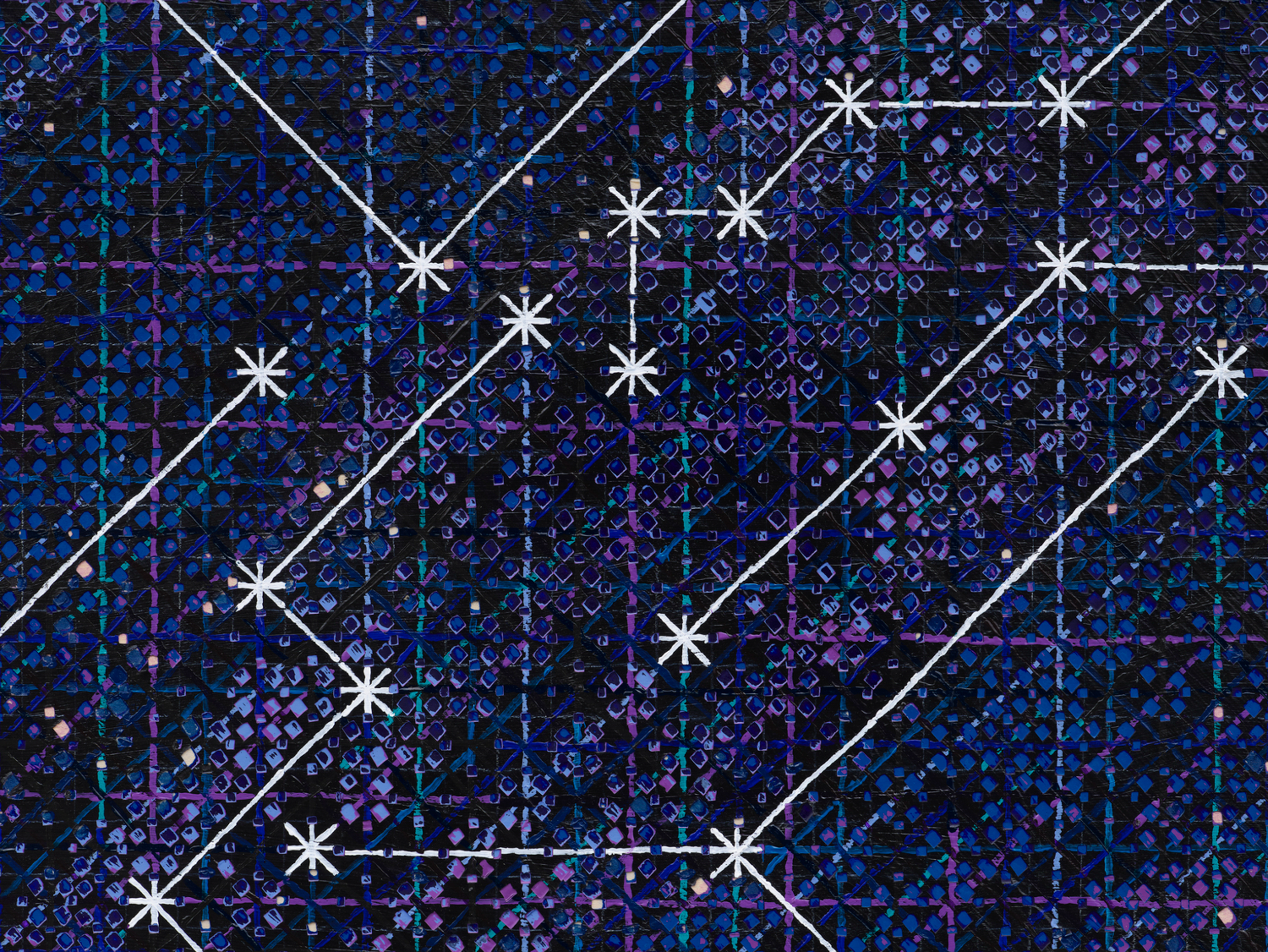
Ding Yi, Appearance of Crosses 2024-12 (detail), 2024, Acrylic and woodcuts on basswood, 120 x 120 cm, 47 1/4 x 47 1/4 in © Ding Yi. Courtesy Lisson Gallery and ShanghART Gallery
Ding Yi
Cosmotechnics: Ding Yi as a Planetary Code
Fondazione Querini Stampalia, Venice
9 May – 22 November 2026
To coincide with the opening of the 61st International Art Exhibition of La Biennale di Venezia, one of China’s most prominent abstractionists, the Shanghai-based artist Ding Yi, presents a major presentation at Fondazione Querini Stampalia. Curated by Alfredo Cramerotti and Auronda Scalera, the exhibition brings together new and historic works that trace the evolution of Ding Yi’s language, alongside a series of stone steles that anchor the exhibition as a place of reflection and ritual, recalling ancient sites across China and Europe. Titled Cosmotechnics – a concept borrowed from philosopher Yuk Hui – the presentation transforms the Area Scarpa into a contemplative forest of images, the works operating like a planetary code with their placement creating a meandering path reminiscent of traditional Chinese gardens. This is Ding Yi’s first time presenting a solo exhibition during La Biennale di Venezia since his participation in the inaugural exhibition of Chinese art at La Biennale in 1993, curated by Achille Bonito Oliva for the 45th International Art Exhibition.
As an intentional departure from the ideological excess of post-Cultural Revolution painting, in 1988 Ding Yi began his Appearance of Crosses series. At a time when Chinese contemporary art was dominated by neo-expressionism and political pop, Ding Yi turned to the grid – not as a neutral device of Western modernism, but as a framework for meaning that was open, relational and generative. Over the decades, his system evolved, expanding into chromatic explorations, fluorescent canvases capturing Shanghai’s urban glow, and eventually sculptural reliefs that introduced shadow and tactility, culminating in projects where viewers could literally walk through the grid.
For Cosmotechnics, Ding Yi brings this inquiry to its most distilled form: twelve black-and-white paintings arranged as a constellation. These panels function as both paintings and contemporary steles, forming a meditative environment that invites the visitor to move slowly and encounter each work from multiple perspectives. The focus on a black-and-white palette marks an important pivot in Ding Yi’s practice: after more than a decade devoted to fluorescent colour, he embraced monochrome as a departure from the saturation of social noise and toward broader questions of time, space and perception. Alongside this, Cosmotechnics also features seven historic works spanning the 1980s to the 2020s, which – seen together – trace Ding Yi’s journey from the disciplined austerity of the late 1980s to a fully expanded cosmotechnical practice, where painting, sculpture, and architecture interpenetrate.
Accompanying these panels are two stone steles, either incised or rendered in relief, carved with Ding Yi’s signature ‘Appearance of Crosses’ motif. These commemorative forms, at once minimal and monumental, situate the paintings within a deeper temporal register, recalling China’s renowned Stele Forest (Beilin) and ancient sites such as Stonehenge, inviting reflection on memory, continuity, and cosmic orientation. These panels also prompt viewers to experience time as simultaneity, as an encounter with history and futurity at once: from classical Chinese ink traditions and memories of industrial Shanghai, to anticipations of the role of technology in our future.
Alfredo Cramerotti and Auronda Scalera, curators, say: “Ding Yi’s Cosmotechnics finds an exact counterpart in Carlo Scarpa’s Area at the Fondazione Querini Stampalia: a modernist instrument of equilibrium designed to live with Venice’s instability rather than deny it. Scarpa measures water, threshold, and passage with the same rigor that Ding Yi applies to the pictorial field. The new monochrome series here is a structural decision, like a register that clears perceptual noise and makes interval and proportion legible. In dialogue with Scarpa, Ding Yi traces a logic of construction in which painting, sculpture, and architecture converge and form a grammar of thresholds, attuned to a city where balance is always negotiated.”
Cristiana Collu, Director of the Fondazione Querini Stampalia, says: “When Carlo Scarpa said he wanted to ‘cut out the blue of the sky,’ he meant that he wanted to render the visual field immediately perceptible, transforming a cosmic element into a bodily encounter through an architectural process; he was speaking poetically, for sure, but also very practically. Ding Yi’s works follow the same principle. Whether stars or cosmic elements are discernible in darkness or concealed in broad daylight, their presence remains constant: only outstanding technique, art and intuition make them always visible. In my reading, they share an architectural syntax, a sort of configuration of points that sustains a latent order, one not readily decipherable, yet perceivable somewhere between wonder and mystery.”
Ding Yi says: “I am honoured to present a series of new works to audiences in Italy and across Europe at the Fondazione Querini Stampalia during the Venice Biennale. The new black-and-white paintings and stone steles reveal the macrocosmic void within the universe of Appearance of Crosses. Twelve basswood paintings of identical dimensions are arranged as a constellation, transforming the exhibition space into a solemn void that invites viewers to contemplate as they wander through the presentation. In juxtaposition, two stone steles bearing relief incisions establish a material and formal dialogue with the engraved marks and brushstrokes of the wooden panels, foregrounding the interplay between painting and sculpture. Solid, still, and silent, these images of steles are not relics; rather, grounded in a practice firmly situated in the present, they respond to the visual structures and temporal measures of the history of civilisation.”
Published by Skira, the volume accompanying Ding Yi: Cosmotechnics is conceived as a critical object in its own right: a book that mirrors the exhibition’s logic of constellation and measured encounter. Bringing together newly commissioned texts, a sustained curatorial dialogue, and a substantial visual corpus – including full installation views within Carlo Scarpa’s Area at the Fondazione Querini Stampalia and a documented selection of works from the 1980s to the 2020s – the publication clarifies how Ding Yi’s monochrome turn reframes his practice through structure, interval, and spatial reciprocity. With rigorous captions, artist chronology, and production notes, it offers both a readable entry point and an enduring scholarly reference, articulating the alignment between Ding Yi’s mark-making and Scarpa’s precision – two practices that transform constraint into equilibrium.
Cosmotechnics: Ding Yi as a Planetary Code is presented by the Fondazione Querini Stampalia with the support of Lisson Gallery and ShanghART Gallery.
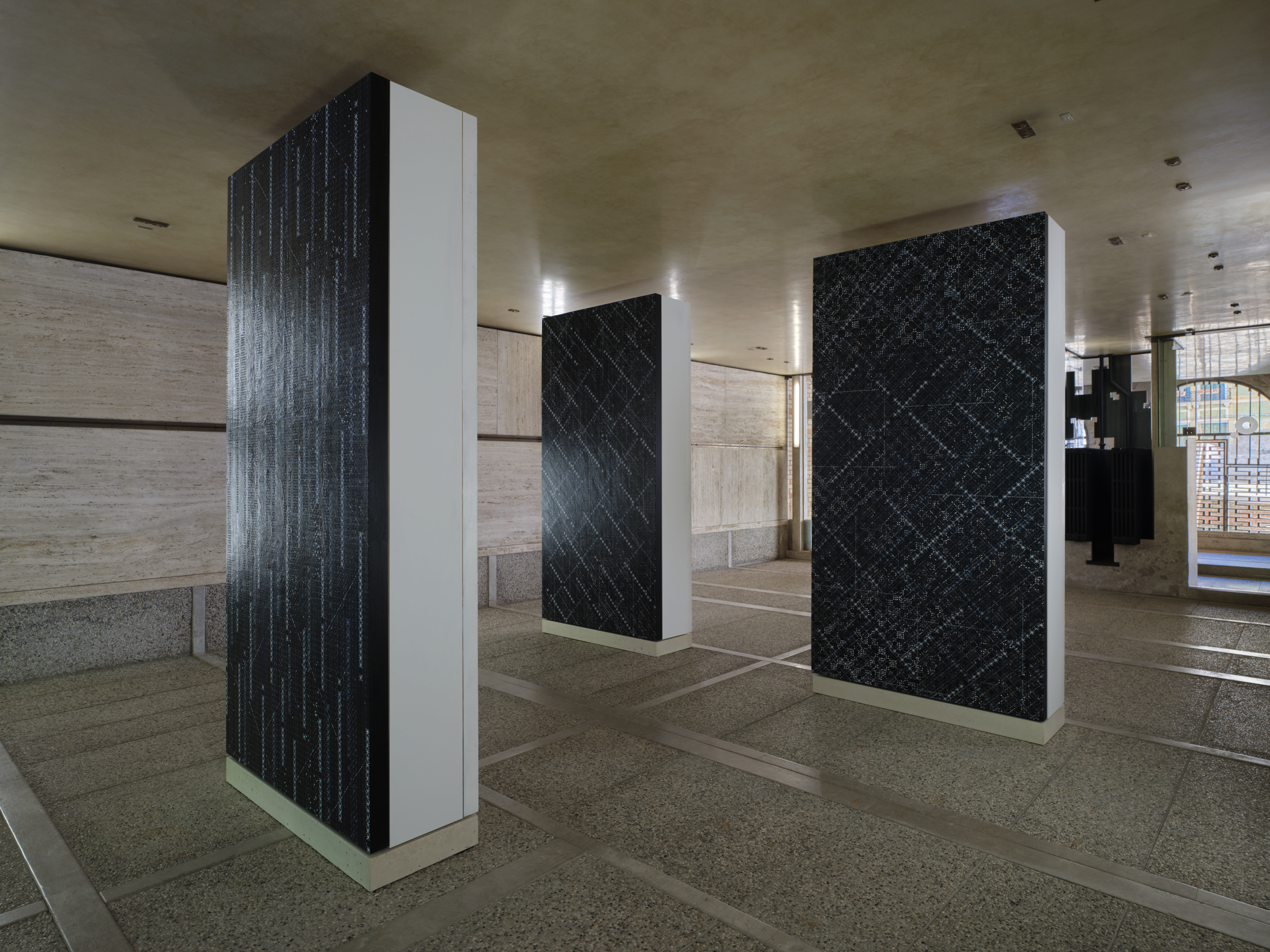
Installation view of ‘Cosmotechnics: Ding Yi as a Planetary Code’, 9 May – 22 November 2026, Fondazione Querini Stampalia, Venice, Italy © Ding Yi. Courtesy Lisson Gallery and ShanghART Gallery. Photography by George Darrell
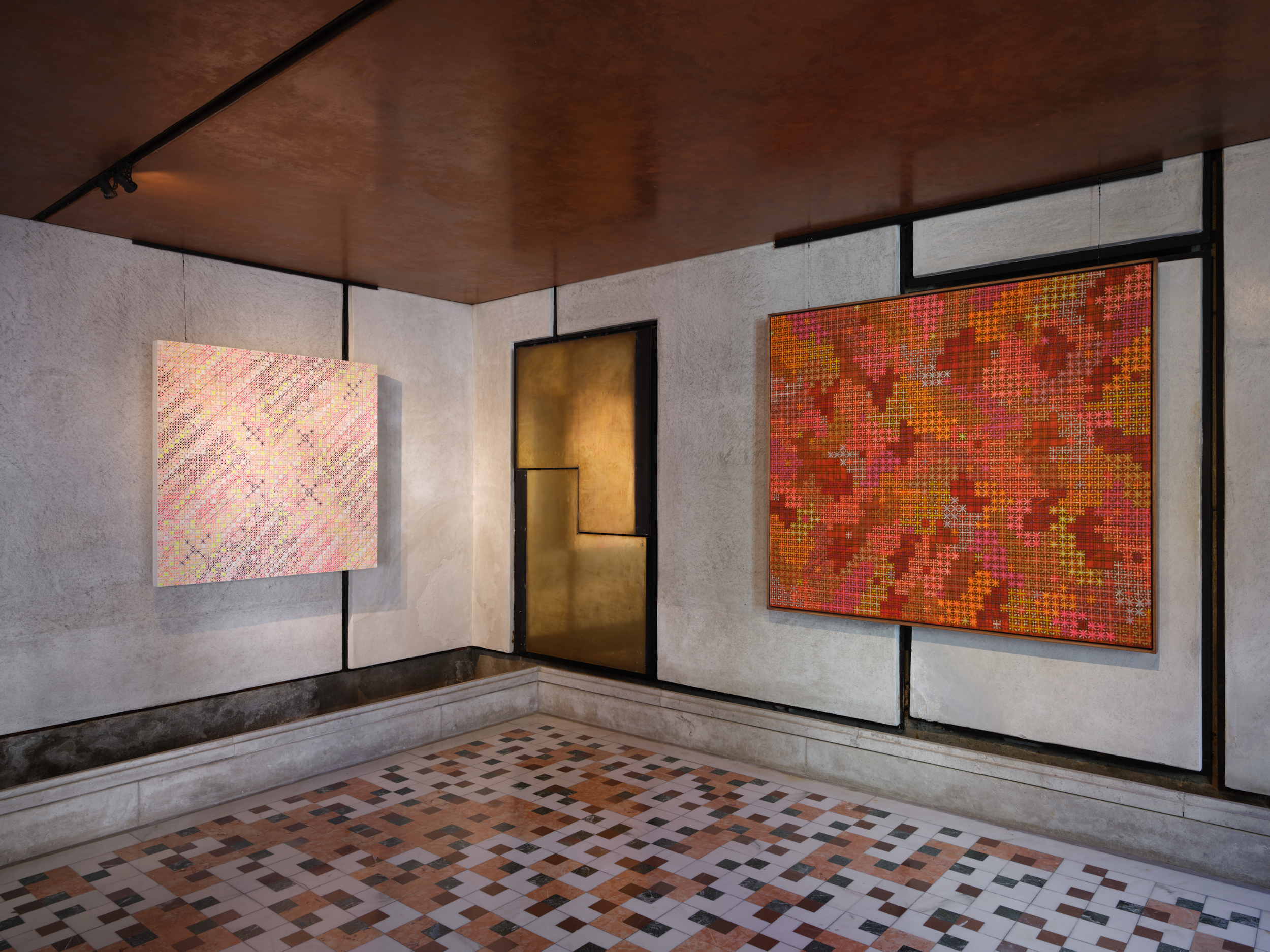
Installation view of ‘Cosmotechnics: Ding Yi as a Planetary Code’, 9 May – 22 November 2026, Fondazione Querini Stampalia, Venice, Italy © Ding Yi. Courtesy Lisson Gallery and ShanghART Gallery. Photography by George Darrell
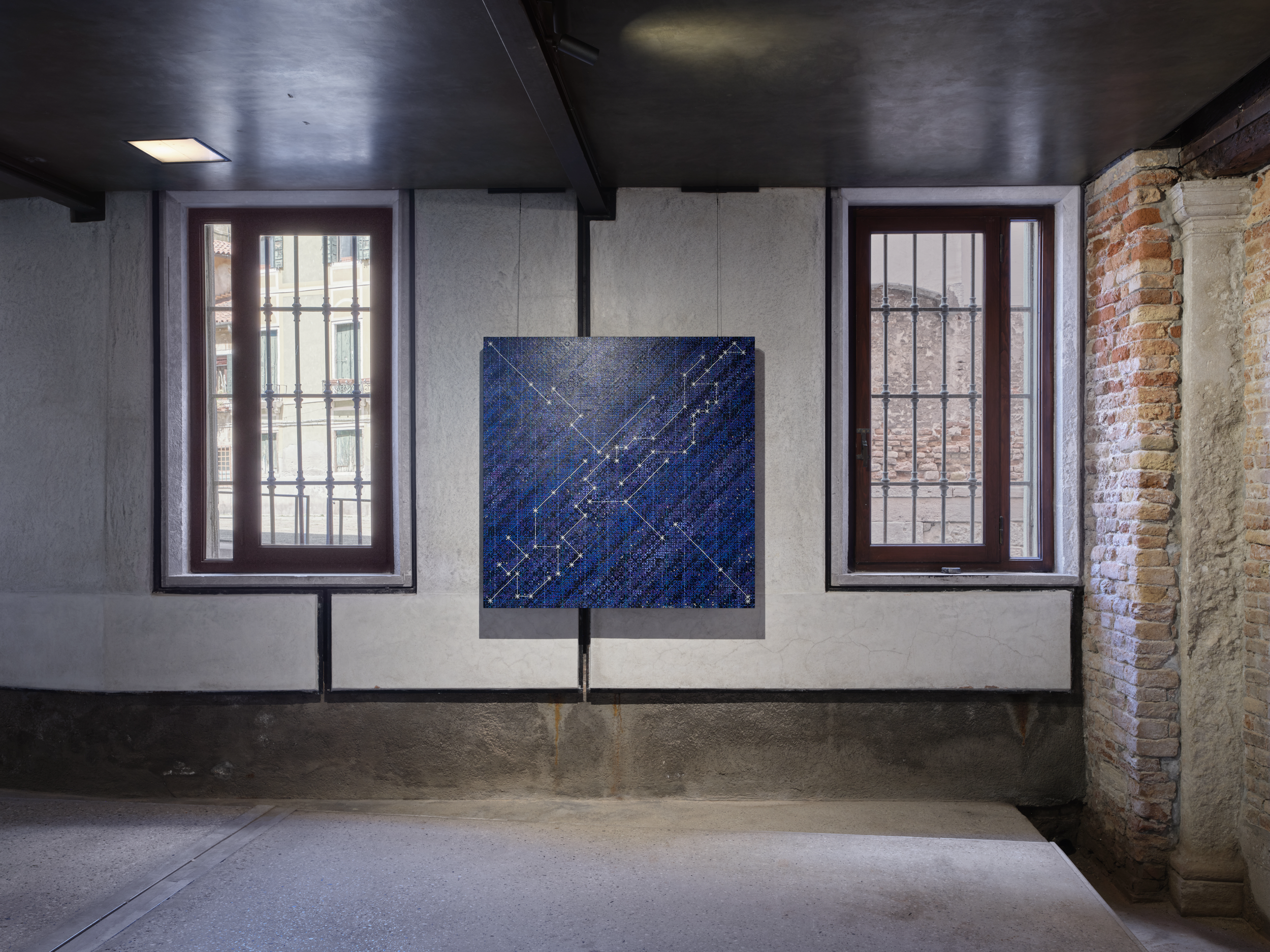
Installation view of ‘Cosmotechnics: Ding Yi as a Planetary Code’, 9 May – 22 November 2026, Fondazione Querini Stampalia, Venice, Italy © Ding Yi. Courtesy Lisson Gallery and ShanghART Gallery. Photography by George Darrell
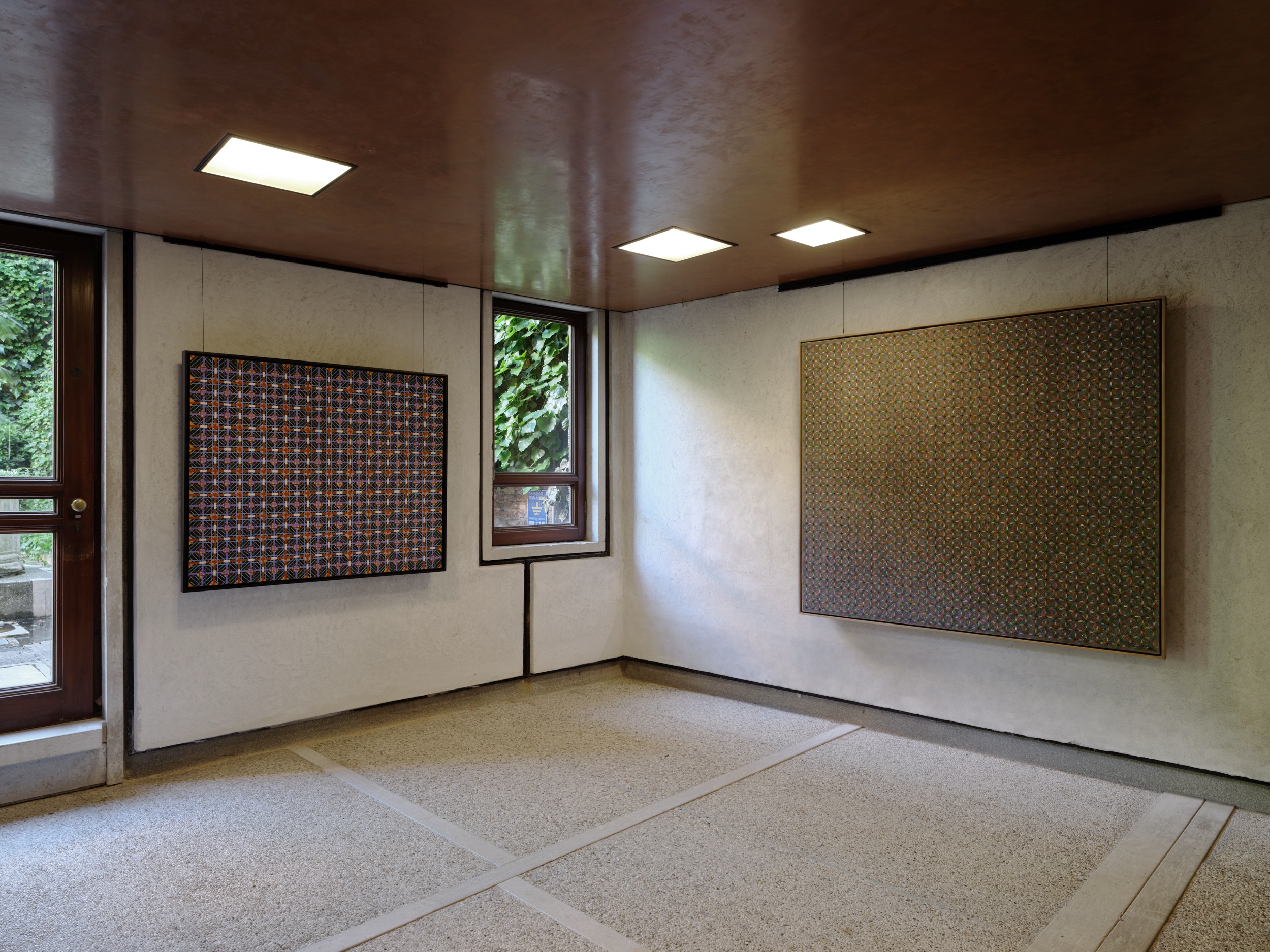
Installation view of ‘Cosmotechnics: Ding Yi as a Planetary Code’, 9 May – 22 November 2026, Fondazione Querini Stampalia, Venice, Italy © Ding Yi. Courtesy Lisson Gallery and ShanghART Gallery. Photography by George Darrell
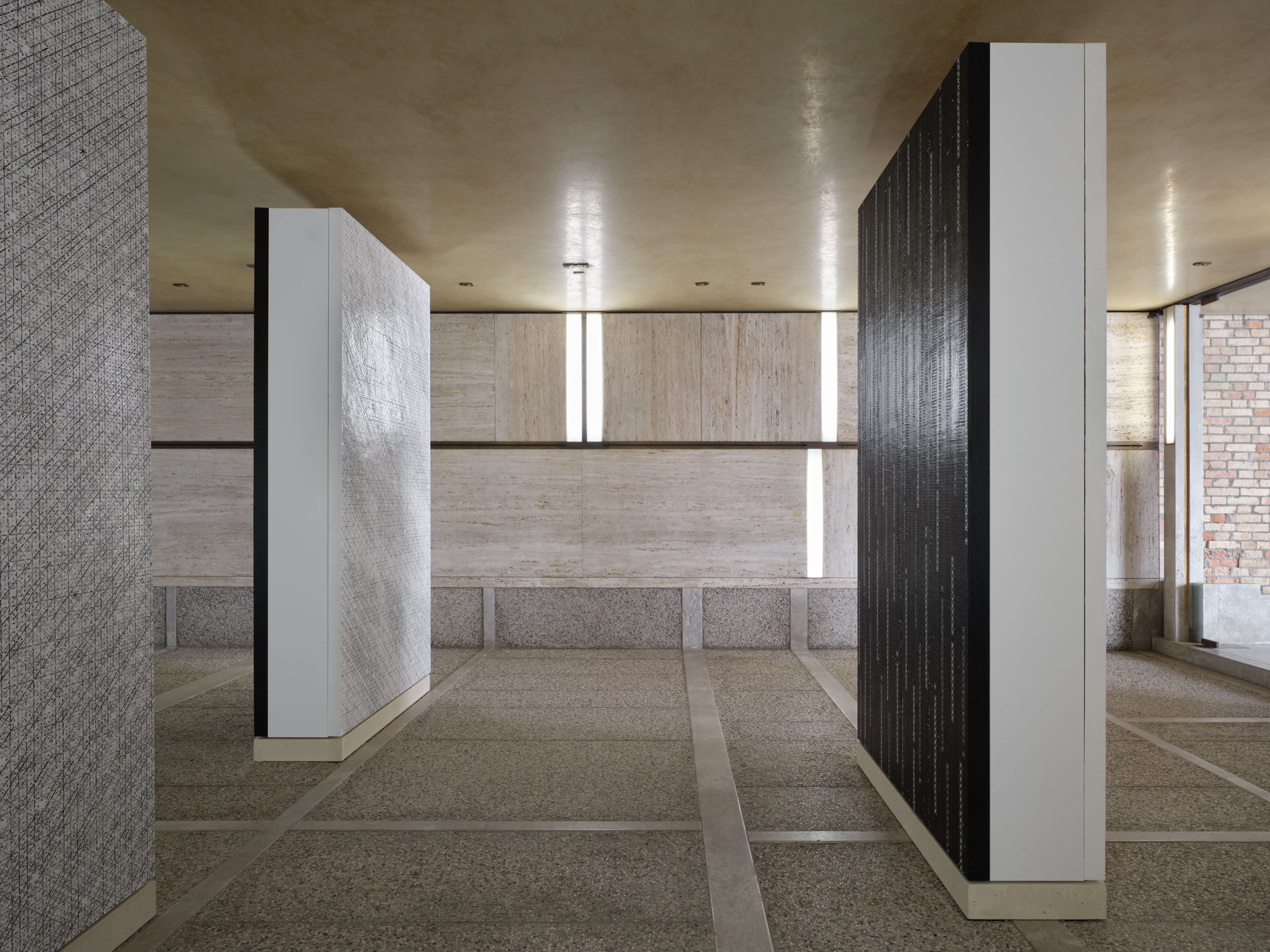
Installation view of ‘Cosmotechnics: Ding Yi as a Planetary Code’, 9 May – 22 November 2026, Fondazione Querini Stampalia, Venice, Italy © Ding Yi. Courtesy Lisson Gallery and ShanghART Gallery. Photography by George Darrell
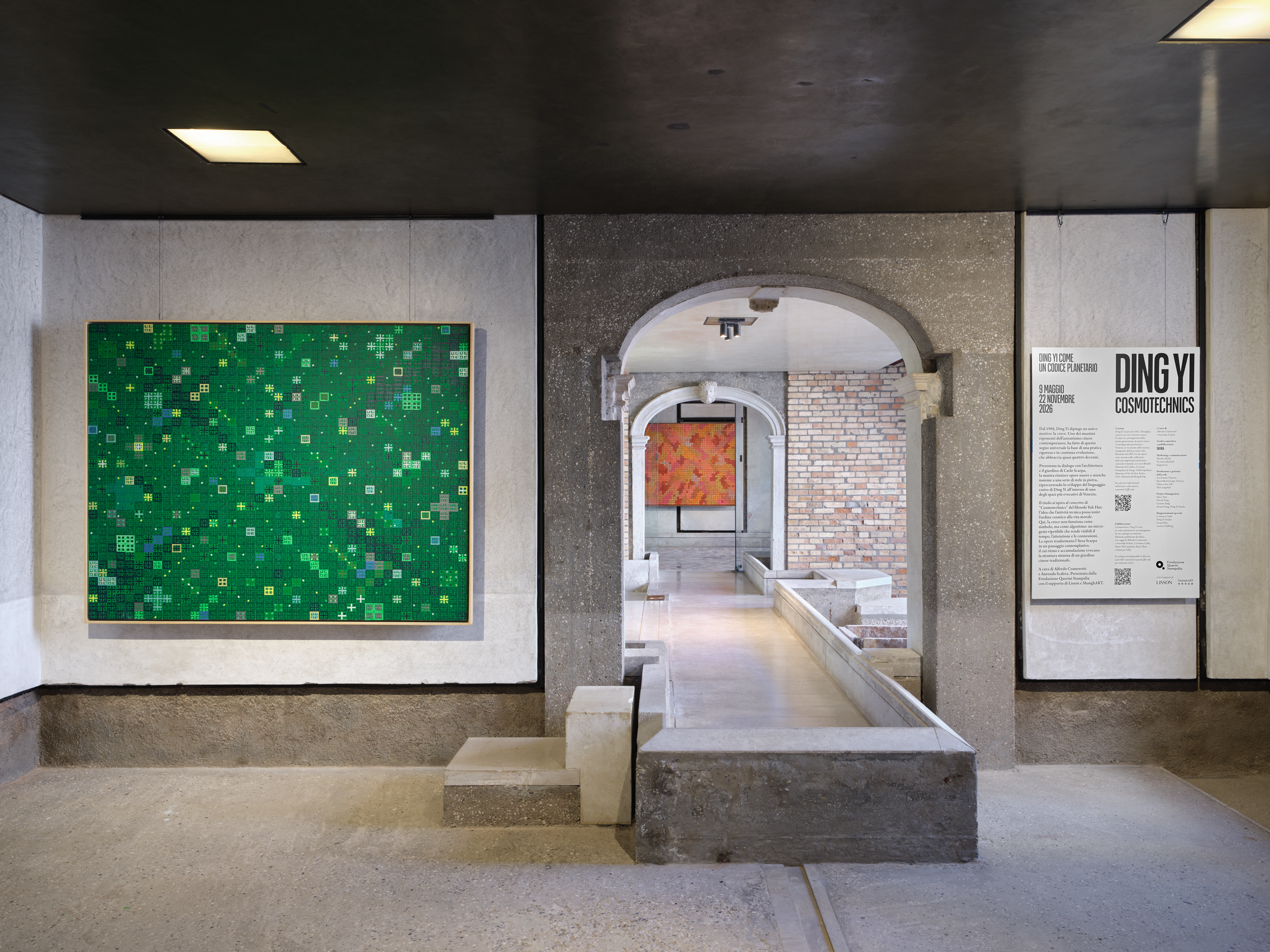
Installation view of ‘Cosmotechnics: Ding Yi as a Planetary Code’, 9 May – 22 November 2026, Fondazione Querini Stampalia, Venice, Italy © Ding Yi. Courtesy Lisson Gallery and ShanghART Gallery. Photography by George Darrell
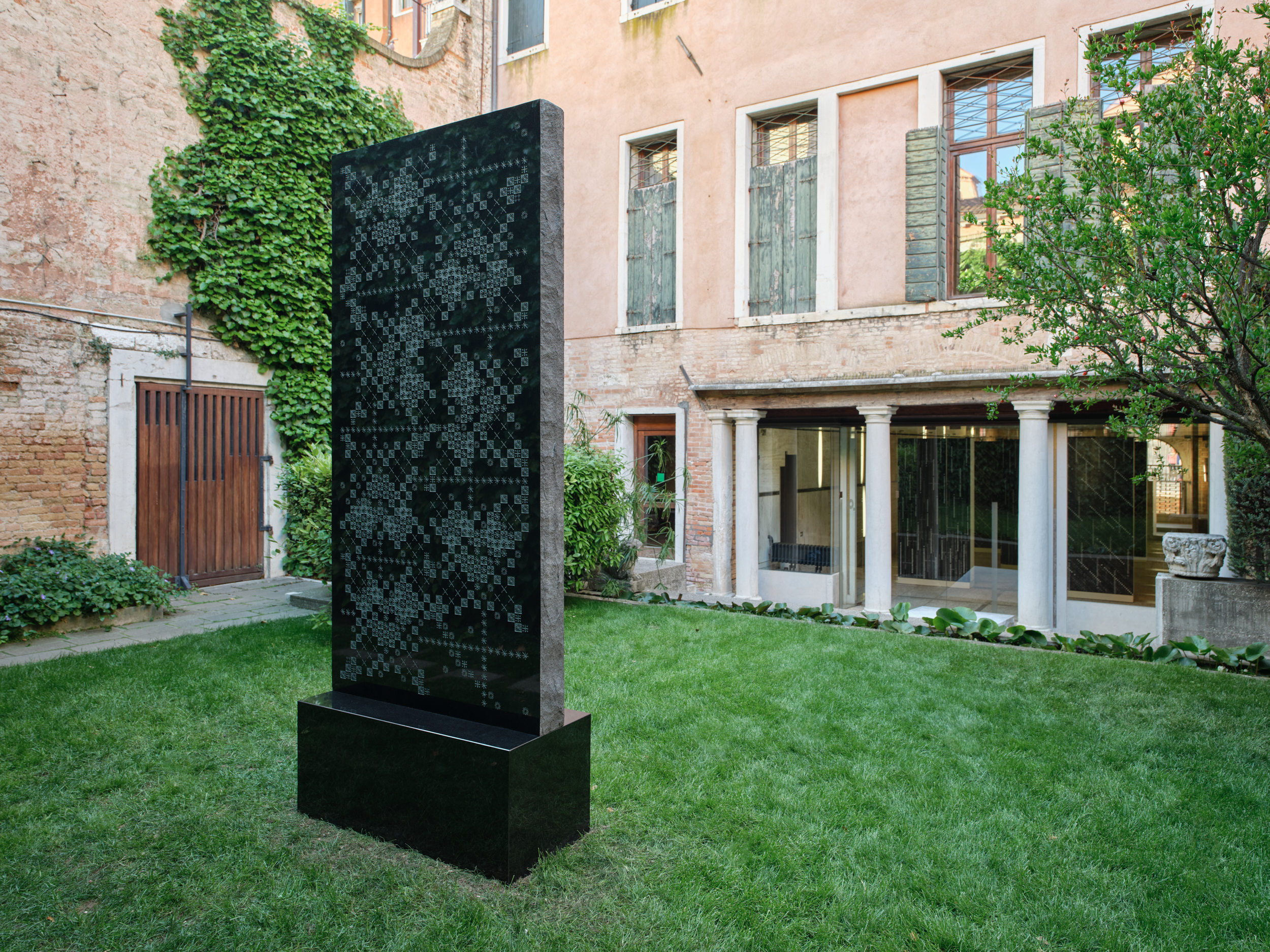
Installation view of ‘Cosmotechnics: Ding Yi as a Planetary Code’, 9 May – 22 November 2026, Fondazione Querini Stampalia, Venice, Italy © Ding Yi. Courtesy Lisson Gallery and ShanghART Gallery. Photography by George Darrell
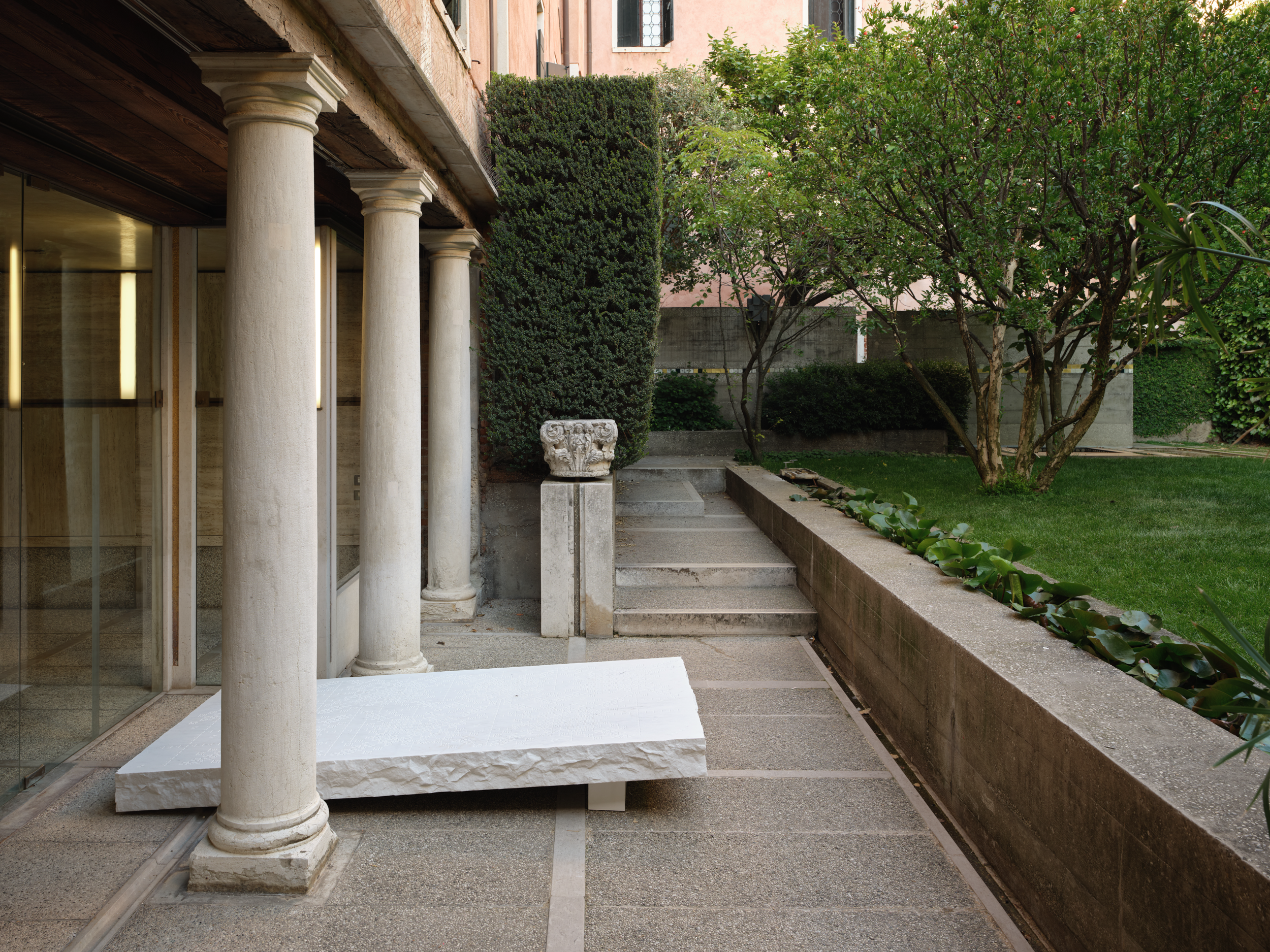
Installation view of ‘Cosmotechnics: Ding Yi as a Planetary Code’, 9 May – 22 November 2026, Fondazione Querini Stampalia, Venice, Italy © Ding Yi. Courtesy Lisson Gallery and ShanghART Gallery. Photography by George Darrell
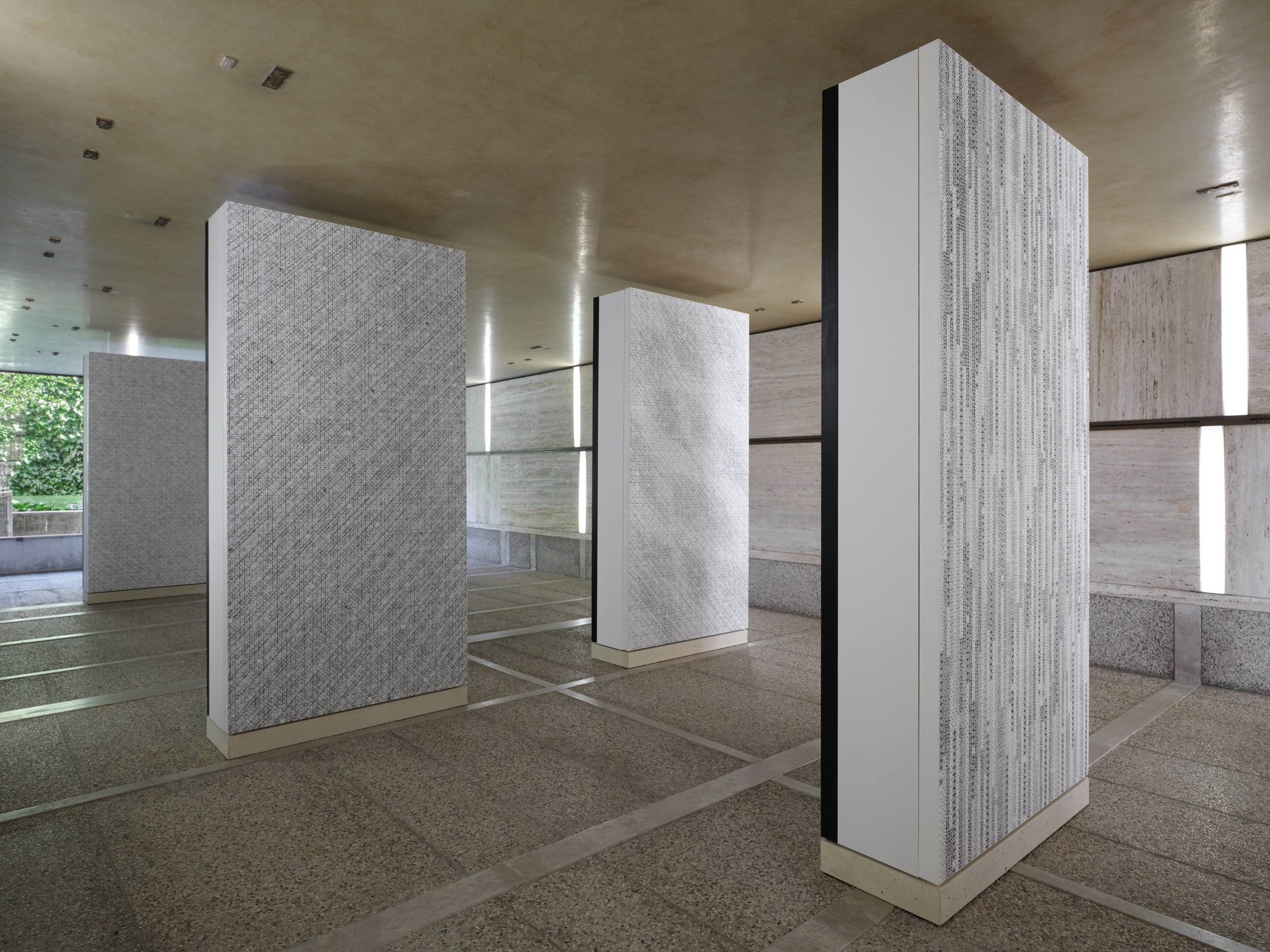
Installation view of ‘Cosmotechnics: Ding Yi as a Planetary Code’, 9 May – 22 November 2026, Fondazione Querini Stampalia, Venice, Italy © Ding Yi. Courtesy Lisson Gallery and ShanghART Gallery. Photography by George Darrell