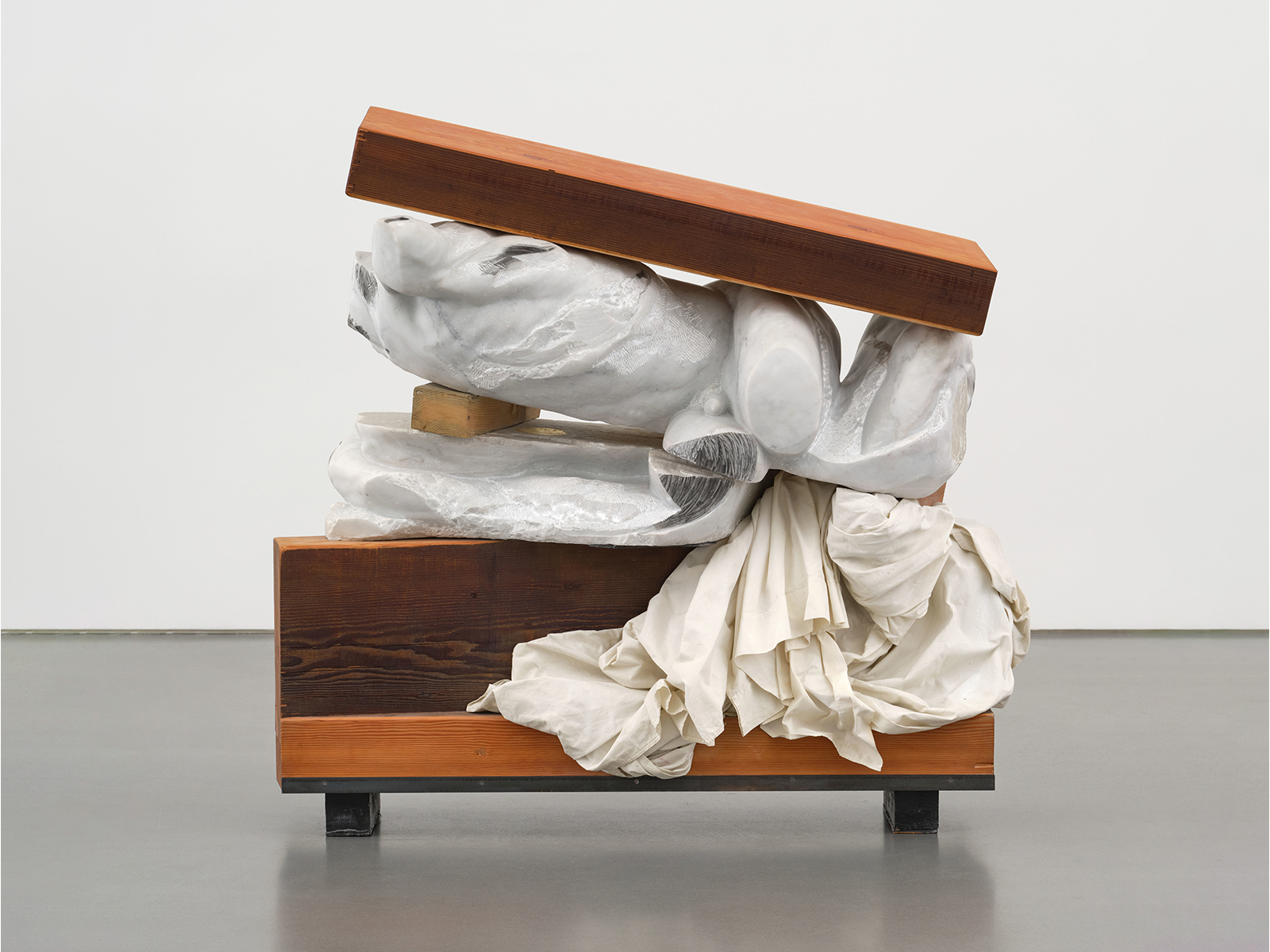
Lisson presents its first Los Angeles exhibition with painter, sculptor, and printmaker Oliver Lee Jackson. A Bay Area resident based in Oakland, Jackson builds his compositions around the human figure, a recurring presence that underpins his work’s structure. This presentation brings together works spanning several decades of his practice from paintings to a group of marble and mixed media sculptures. His sculptural output, a lesser-known but vital aspect of his oeuvre, was last seen in a monumental commission of metal figures for New York’s High Line in 2024, while these forms are being presented publicly for the first time.
Read moreAfter initially carving marble in Carrara, Italy in the 1980s, Jackson took to sculpting sensuous figures from stone and wood, but often left the unfinished works aside as he ruminated over their final forms. The resulting sculptures are complex constructions of juxtaposed matter, including draped cloth and graphite marks – each medium seeking out the figure contained within. Rupture occurs in the breaks and cuts between these materials, with flashes of gold leaf adding a sense of quiet ritual or spiritual uplift, but harmony is restored through Jackson’s keen sense of composition and balance. While these multipartite works are recently completed, they all contain components begun many years, perhaps even decades ago. Earlier sculpted forms may reference totemic monuments and African sculptures, their relative horizontality or verticality dealing with emergent figures experiencing compression or weightlessness.
Figures in flight, figures in shadow, figures in limbo and under duress also pervade Jackson’s new paintings. The fugitive nature of his figuration is mirrored by his non-hierarchical technique of drifting between the use of spraypaint, chalk, enamel and oil stick, as well as the drawn line. His paintings move from the classical to the modern, from sky to earth, all while exploring the emotions of certain poses and bodily contortions. The figurative image is not for Jackson an exercise in bodily verisimilitude, but instead signifies a search for a universal feeling or a physical state that can be inferred through a crouched posture, a silhouetted face or a prone position. The colored grounds of each panel are prepared for Jackson without his prior knowledge, adding an extra challenge into the process.
In both two and three dimensions, Jackson’s figures emerge and recede, generating a vivid sense of movement and depth. Sometimes clearly formed and sometimes fleeting, these collected forms shape a visual language that balances moments of clarity with ambiguity and mystery, inviting viewers into a fluid, evolving experience.